
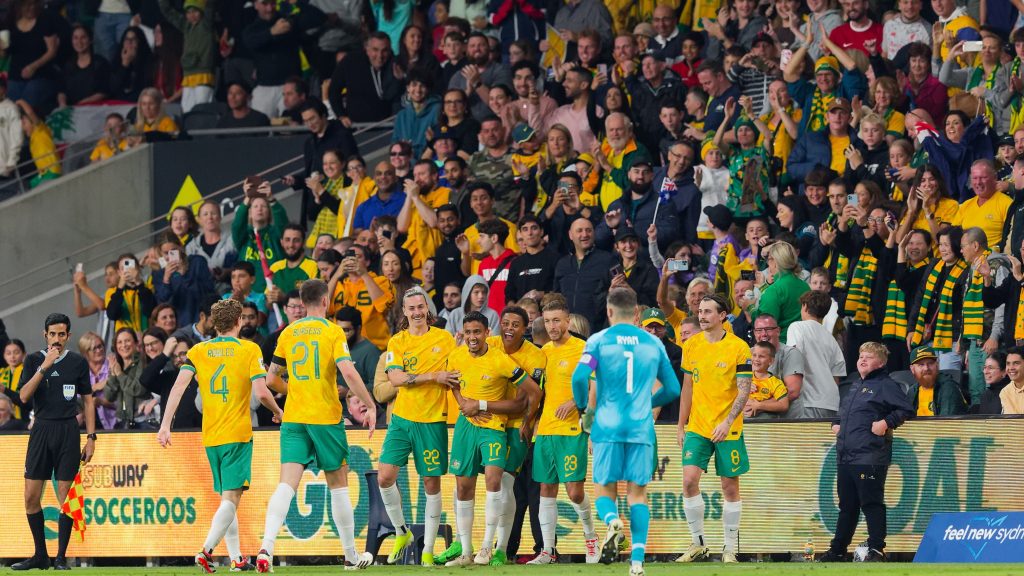
Australia is going to the men’s World Cup for the sixth time in a row, and this time, things are more organized than before. The Socceroos qualified automatically in June 2025, so now the focus is on preparing for three matches in 13 days.
Tony Popovic became head coach in September 2024 after Graham Arnold stepped down. Now, he faces a different challenge from most World Cup managers. He leads a team that already knows how to qualify and now needs to perform even better at the tournament.
Australia’s group is simple to describe but challenging to play in. The Socceroos are in Group D with the United States, Paraguay, and the winner of UEFA Play-Off C. The fourth team will be decided in March 2026, with Türkiye, Romania, Slovakia, and Kosovo competing for the spot.
The locations of the matches matter. Australia’s group stage games are all on the west side of North America: first in Vancouver, then Seattle, and finally Santa Clara in the San Francisco Bay Area. This west coast route is important for anyone following the team.
The team’s identity has a long history. According to Football Australia, the nickname “Socceroos” began in the late 1960s, created by Sydney journalist Tony Horstead. As the team traveled, the name caught on. This history shows how Australia’s football team built its reputation through a strong identity, not just by being in the spotlight.
What the schedule tells you and what to do with it
Australia’s three group matches already have set dates, venues, and kickoff times, which makes planning easier. The first game is on Saturday, June 13, 2026, at BC Place in Vancouver against the UEFA Play-Off C winner, starting at 9:00 p.m. local time (2:00 p.m. AEST on Sunday, June 14). The second match is Friday, June 19 in Seattle against the USA at 12:00 p.m. local time (5:00 a.m. AEST on Saturday, June 20). The last group game is Thursday, June 25 in Santa Clara against Paraguay at 7:00 p.m. local time (12:00 p.m. AEST on Friday, June 26). If you are watching from Australia, use the AEST times to plan. If you are in North America, focus on the local times in each city. The schedule changes from a late evening kickoff in Vancouver, to midday in Seattle, and then an evening match in Santa Clara.
For Australian viewers, the key detail is that SBS will show the tournament on its platforms, including SBS On Demand for streaming. Having one broadcaster makes it easier to find matches, schedules, and highlights, especially with the time zone differences.
If you are in the host cities without tickets, check out the official fan zones. These are for people who want to join the event even if they are not inside the stadium. Seattle will have a Fan Celebration at Seattle Center, and Vancouver will host a FIFA Fan Festival at the PNE grounds in Hastings Park. These are the main public gathering spots connected to the tournament schedule, especially if you want to follow one team in different cities.
To follow Australia closely, it helps to know which players are central to this team. The best place to start is the match that secured qualification. In June 2025, Australia beat Saudi Arabia 2–1 in Jeddah. Mat Ryan reached his 100th cap and saved a late penalty, while Connor Metcalfe and Mitch Duke scored. This match shows how the team relies on experienced players and those who make the most of their The rest of the squad can also have a big impact at the World Cup, and Australia has added new players since qualifying. In September 2025, the Soccer Ashes match against New Zealand featured more players: Mohamed Touré and Nestory Irankunda scored, while Kye Rowles and Cameron Burgess played in defense. Matches like this help fans see which players are trusted in important games, not just listed on the roster. matches.
Many fans may not realize how hard it can be to manage travel, support, and information when the World Cup is held in different countries. Football Australia has an official Socceroos fan travel program for 2026. There is also the Green and Gold Army, a supporters’ group started in 2001 that helps with travel and tournament experiences. You do not have to choose just one, but it helps to know the difference: one is official, the other is a long-standing fan network. Both make the tournament easier to handle.
Rivalries are important because they show how a team has developed. For Australia, Japan has been a key opponent this cycle. The 1–0 win over Japan in Perth helped secure qualification and shows that Australia’s hardest games are often against Asia’s top teams. The rivalry with New Zealand is different, based on geography and history, and is now connected to the Soccer Ashes trophy. It is now a regular match that gives the team more competitive games outside the AFC schedule.
If you want a simple way to follow Australia, start with three steps. First, add the match times to your calendar using the official time conversions. Next, decide how you will watch—either at home on SBS in Australia or at fan events in the host cities. Finally, get to know the key players, starting with Ryan, Metcalfe, and Duke from the qualification match, and including Touré and Irankunda as new attacking talents.
After that, it’s about staying updated. The fourth group opponent will be confirmed in March 2026, and ticket or stadium details might change before the tournament starts. To avoid surprises, rely on Football Australia and the official broadcaster for updates. The best approach is to be ready to watch the tournament as it happens, with the right information and timing.