The best defender you’ve ever watched isn’t necessarily the greatest defender of this century. Paolo Maldini’s place among the best left-backs of all time is secure. But a ranking beginning in 2001 can’t borrow the European Cups he won in 1989, 1990 and 1994.
Only performances from January 1, 2001 onward count here, in men’s football. Defensive peak and sustained excellence carry the greatest weight, followed by contributions in major matches and the demands of each player’s position.
Center-backs, fullbacks and wingbacks shouldn’t be judged as though they had identical assignments. Recovering possession matters. So does keeping it, helping a team escape pressure and recognizing when an attacking run would leave too much space behind.
Trophies provide context, not an automatic order. Organizing a title-winning defense for a season counts differently from collecting a medal on the fringes. And an extraordinary tournament doesn’t end the argument about an entire career within this period.
10. Thiago Silva
Thiago Silva takes tenth, narrowly ahead of Carles Puyol and Nemanja Vidić. His longevity at the highest level earns that final place. Seven French league titles at Paris Saint-Germain were followed by four seasons at Chelsea, where he added the Champions League. Staying useful to different teams as the physical demands changed required constant adjustment. Silva’s positioning and organization make his longevity a football argument, not simply an age statistic.

9. Rio Ferdinand
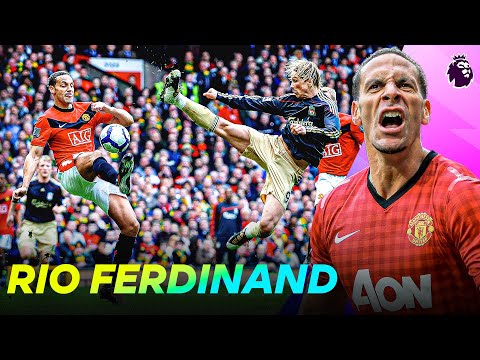
Rio Ferdinand is ninth. His pace changed the territory he could defend, while his comfort in possession meant a recovery could become the beginning of an attack. Six Premier League titles with Manchester United put that combination under sustained examination. He offered a team a choice between playing through pressure and using a longer pass to escape it, without sacrificing the ability to deal with a forward running behind him.
8. Dani Alves
Dani Alves finishes eighth. Treating his attacking contribution as irrelevant would mean ignoring a substantial part of his job. His combinations with Lionel Messi gave Barcelona another way to create openings down the right, and he remained influential across several coaches. Three Champions Leagues and six Spanish league titles support the scale of that contribution. Lahm ranks higher for his defensive control, but Alves’s inventiveness belongs in this company.

7. John Terry
John Terry comes seventh, with the edge over Ferdinand resting on penalty-area defending and organization. Chelsea’s captain across five Premier League title-winning campaigns, Terry gave successive teams a recognizable defensive authority. His playing contribution wasn’t identical in every championship season. At his best, though, he could make a crowded penalty area feel organized, knowing when to attack the ball and when to protect the space around a teammate.

6. Fabio Cannavaro
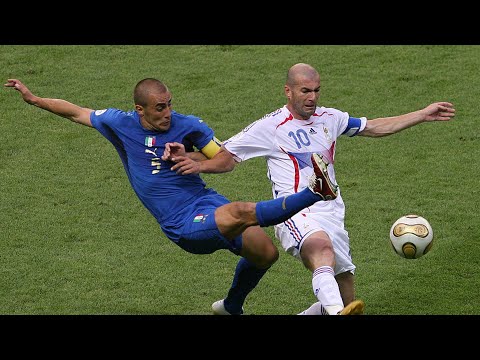
Fabio Cannavaro is sixth. His 2006 World Cup offers an unusually strong answer to the question of how much a defender can influence a tournament. Italy won with him as captain, and he ended the year with the Ballon d’Or and FIFA World Player of the Year awards. His claim to a higher position is strongest on peak performance; the players above him get the benefit of a broader combination of club influence and sustained excellence.
5. Virgil van Dijk
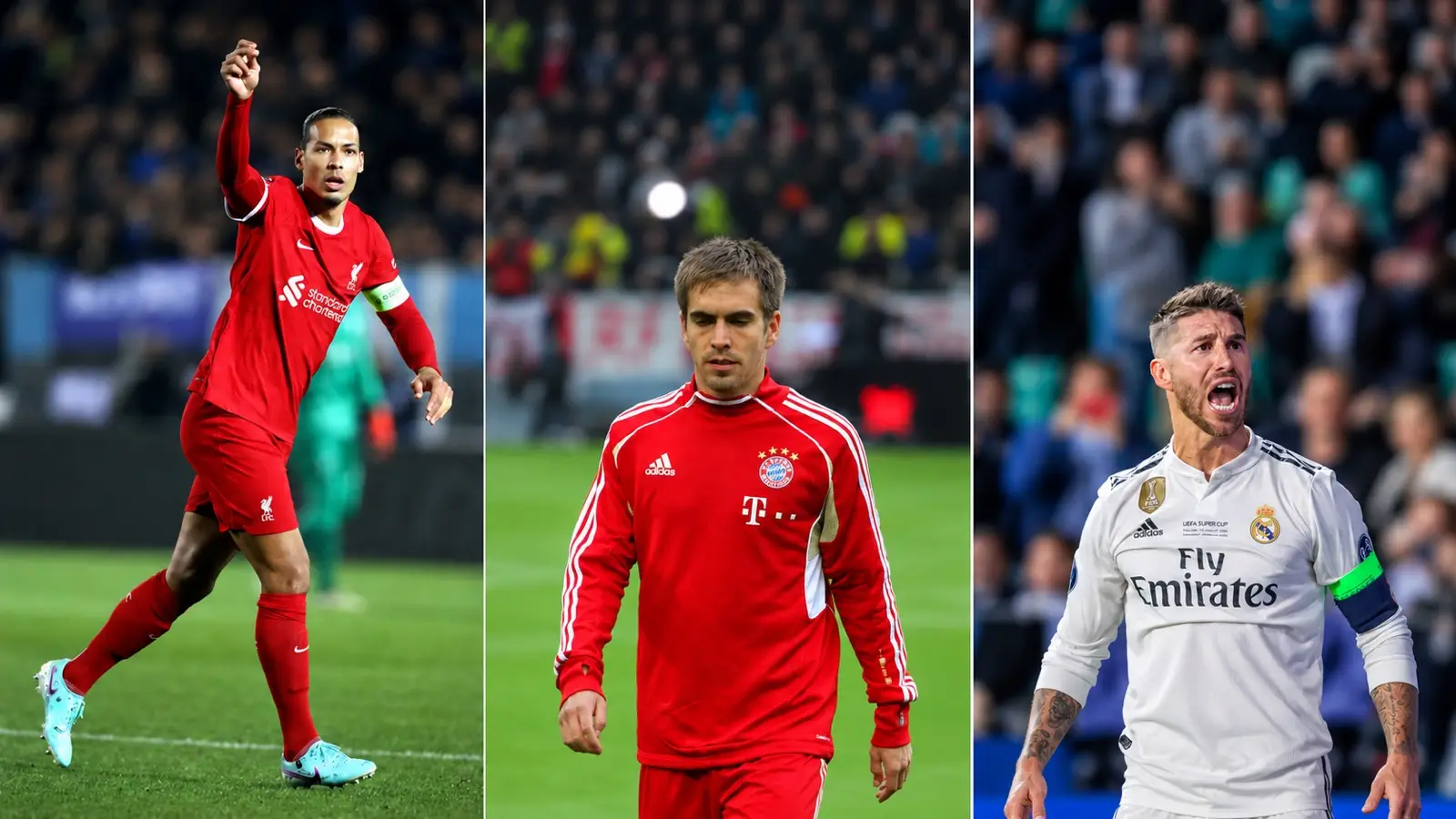
Virgil van Dijk takes fifth. At his best, he could defend the aerial ball, cover the space behind Liverpool’s line and move possession forward without looking hurried. His 2018/19 UEFA Men’s Player of the Year award recognized an exceptional season, including victory in the Champions League. Five FIFPRO World 11 selections from 2019 through 2025 give his case a longer foundation. Fifth isn’t a dismissal of his peak, but a judgment about the careers surrounding it.

4. Alessandro Nesta
Alessandro Nesta is fourth. The narrow preference over Van Dijk rests on defensive timing and anticipation, not a claim that Nesta was quicker or stronger. His reading of a forward’s next action could make the eventual tackle look simpler than it was. Milan’s Champions League victories in 2003 and 2007 provide the major club landmarks. Injuries interrupted his availability, but his ability to control an individual duel earns this position.

3. Paolo Maldini
Paolo Maldini finishes third. Remove his earlier European triumphs and there’s still a formidable case: he captained Milan to the 2003 and 2007 titles, lifting the latter at 38. This wasn’t a famous name occupying a ceremonial place. He played all 17 matches in the 2002/03 Champions League campaign. Third reflects the shorter portion of his career available for consideration, not a dismissal of his all-time standing.

2. Philipp Lahm
Philipp Lahm is second. At either fullback position, he offered assurance over when to advance, hold his ground or move the ball on. Bayern’s 2013 Champions League-winning captain also led Germany to the 2014 World Cup and won eight Bundesliga titles. The attraction is the repeatability of his decisions. He could offer an attacking outlet without treating defensive responsibility as someone else’s problem.

1. Sergio Ramos
Sergio Ramos takes first. Across 16 Real Madrid seasons, he combined defensive responsibility with a capacity to decide major matches, winning four European Cups. Spain’s 2008 and 2012 European titles and 2010 World Cup broaden the record beyond one club. His aggression had costs, including a disciplinary record that can’t be waved away. Neither should his 2014 Champions League final equalizer be allowed to stand in for his entire career.
Lahm offers the cleaner model of defending. Ramos gets our vote for the stronger overall contribution within this period. Greatest doesn’t have to mean faultless.