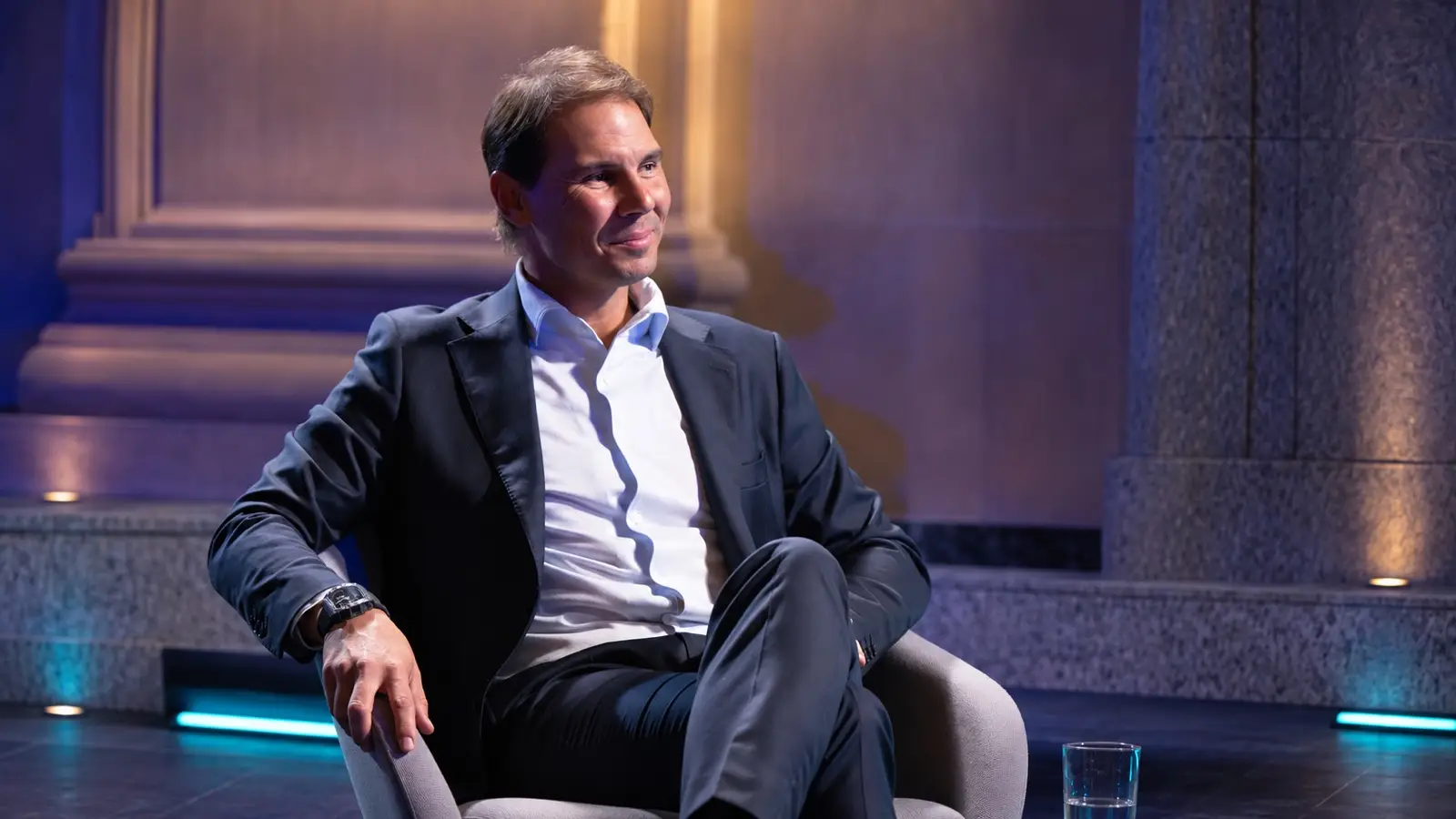
Rafael Nadal has arranged training around Real Madrid matches and followed the club across the time zones of a tennis career. Now he’s set to help govern it. The 22-time Grand Slam champion has accepted an invitation to join Florentino Pérez’s board, with member representatives due to vote on ratification on November 21.
Madrid is governed by its members, and its board helps shape club policy, prepares budgets and accounts for assembly approval, and exercises broad authority over the institution’s affairs. Madrid hasn’t announced a particular department or project for Nadal. His place would bring him into collective decisions about the club’s direction.
His allegiance came through his father, Sebastián, even as his uncle Miguel Ángel played for Barcelona. Nadal explained that family influence in his autobiography, alongside the lengths he’d go to watch Madrid while traveling for tennis. The club made him an honorary member in 2011. By the time he took the ceremonial kickoff before a game against Espanyol in 2022, the association had become a familiar part of his public life.
From Madrid supporter to boardroom nominee
The relationship has occasionally helped Madrid behind the scenes. Pérez recalled in a 2017 interview that he’d asked Nadal to contact his uncle, Mallorca’s sporting director during negotiations over Marco Asensio. Nadal provided a connection as Madrid worked to sign the player.
He’d also put money into football before this invitation. Nadal joined an investment group at Mallorca in 2010, when the club needed financial support, with a representative expected to sit on the board on his behalf. He and Miguel Ángel sold their joint 10% stake the following year. Madrid now offers him a direct place in the governance of the team he grew up supporting.
The tennis stars investing in football
Nadal’s move adds a different kind of involvement to the growing list of sports stars investing in football. Novak Djokovic entered Le Mans’ ownership group in 2025 through a partnership involving investment firm OutField. The French club still named him among its shareholders when it announced further investors in September 2026. A rivalry that stretched across tennis’s biggest tournaments now has a parallel in the football business, with the two players taking different routes into it.
Naomi Osaka became a minority owner of the North Carolina Courage in 2021, and Ons Jabeur followed in 2023. Serena Williams was part of Angel City’s founding ownership group in 2020. Their investments gave women’s football backing from athletes with enormous reach, while offering the players a stake in another sport’s development. Jabeur has explicitly connected her involvement to supporting women’s sports.
Ownership and board membership can overlap, but they’re separate roles. The Courage lists Osaka and Jabeur as minority investors, apart from its named board members. Madrid’s announcement concerns a seat in its governing body, with no share purchase disclosed.
When tennis players become football executives
For a former tennis professional who has taken substantial control of a football team, look to Mallorca. Andy Kohlberg spent a decade on the ATP Tour before moving into business. He became president of Mallorca’s board in 2017 and its majority owner in 2023. Basketball’s Steve Nash also served on that board, leaving in 2021 after becoming Brooklyn Nets coach while retaining his investment connection.
Paris Saint-Germain president Nasser Al-Khelaïfi was a professional tennis player and represented Qatar in the Davis Cup before his rise through sports administration and investment. Across Madrid, Atlético director Robert Givone also has a professional tennis past, although his route to the board came through his career at Apollo. Tennis can lead into football leadership through years spent building businesses as well as through sporting fame.
Williams has already taken that broader step outside football. SurveyMonkey announced her board appointment in 2017, and Poshmark followed in 2019. At Poshmark, she served as an independent director and sat on the compensation committee. Those positions involved formal company governance, adding another dimension to the investments and partnerships that athletes accumulate during their careers.
Nadal brings his own experience of building an organization. His academy opened in Manacor in 2016 and developed into a sports and education operation with an international presence. That background could prove useful as he takes on collective responsibility for another sporting institution.
Could other tennis champions follow Nadal?
Carlos Alcaraz is a natural name to consider if another tennis champion eventually follows the same path at Madrid. The club has publicly described him as a major supporter, and Pérez welcomed him to the presidential box for a match against Sevilla in December 2024. A future role would have a natural personal connection. There’s no announced approach or plan for him to join the board.
Madrid’s membership rules would also shape any future approach. Its published statutes require an ordinary director to have ten years of uninterrupted club membership, rising to 15 for a vice-president and 20 for the president.
Roger Federer’s relationship with Basel has already extended into support for the club’s future. He’s lent his name to its Owners Circle fundraising initiative, which supports youth development. Andy Murray has a comparable connection to Hibernian through family allegiance and the work his management company began with young players Ryan Porteous and Fraser Murray in 2018.
Jannik Sinner’s support for Milan and Caroline Wozniacki’s longstanding attachment to Liverpool provide other recognizable pairings. None of those relationships comes with an announced board plan. Federer’s fundraising and Murray’s past mentoring, however, show how a tennis player can start contributing to a club well before taking on a formal governing role.
Nadal has previously entertained the idea of becoming Madrid president, while questioning whether he’d be qualified. He distanced himself from reports linking him to candidacies in May 2026, and this appointment comes without an announced succession plan. Board service would give him a chance to learn how Madrid works from the inside and consider whether governing the club he loves is something he wants to make a second career.
Get more Stadio United on Google.