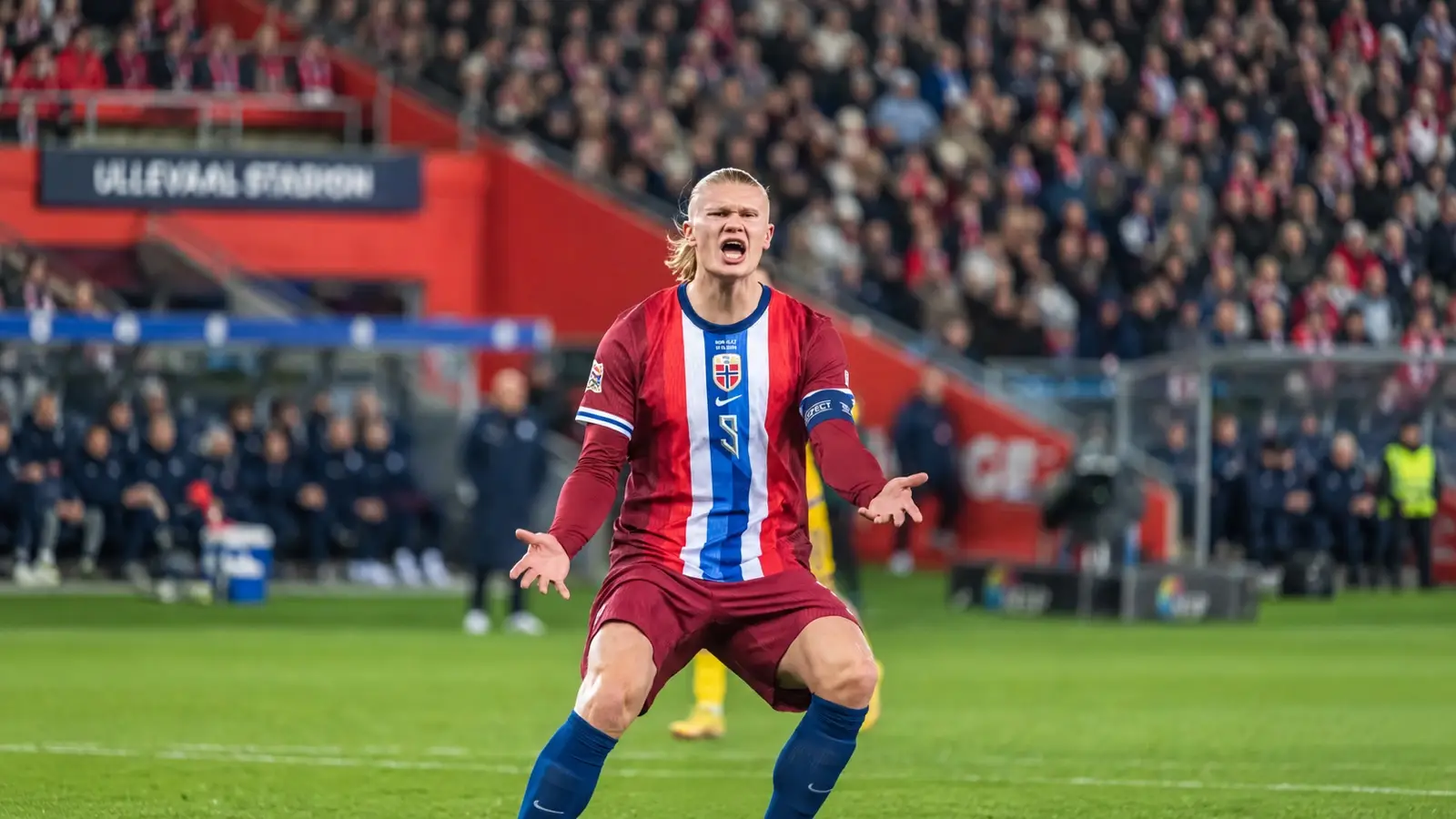
Norwegian Air Shuttle gave a plane Erling Haaland’s ponytail without putting the footballer in the picture. The edited World Cup post carried the caption, “We’ve never looked more Norwegian.” Now the airline faces a lawsuit from Haaland and his company, York Promotions Ltd.
The image borrowed the long-haired look Haaland made familiar at Manchester City and with Norway. His lawyer, Thomas Hagen, alleges that Norwegian unlawfully used the striker’s identifying features to promote flight tickets during the tournament. Norwegian says it was joining the country in supporting the national team.
Airline spokeswoman Catharina Solli told AFP that the posts were spontaneous responses to social-media trends. The company has confirmed receiving the lawsuit, expressed regret that its support prompted legal action and said it hopes to resolve the disagreement through dialogue.
Norwegian has deleted the aircraft image and other Haaland-related posts, but the exact scope of the lawsuit remains undisclosed. The dispute concerns alleged commercial use of his identity, not an established right to stop anyone else wearing the same hairstyle.
According to VG’s account of Oslo District Court’s calendar, a video planning meeting is scheduled for October 9. It’s a preparatory meeting, not a trial or a ruling on whether the airline infringed Haaland’s rights.
Haaland’s hair already has a commercial partner
Haaland already has a business relationship built around the accessory that kept his hair in place. Norwegian brand KKNEKKI released an official collection of eight hair ties chosen by him, each with a bead bearing his name. He’s also an investor.
“I wear KKNEKKI and have invested in the company because I believe in the product,” Haaland says in the brand’s account of the collaboration.
That collection puts a tangible product behind an otherwise abstract argument about image rights. The hairstyle is recognizable, but the accessory can be packaged, named and sold. KKNEKKI’s involvement doesn’t prove Norwegian broke the law. It shows the difference between a company working with Haaland and a company referring to him.
Norwegian wasn’t the only brand using Haaland references during the World Cup. Wendy’s, HelloFresh and Crocs Europe also posted content built around his appearance, according to VG. Asked whether other companies had been sued or could face action, his lawyer declined to comment.
Norwegian courts have dealt with recognizable athletes whose faces weren’t visible before. In 2009, the Supreme Court awarded compensation to American snowboarder Andy Finch after a photograph of him was used without his consent in material promoting Tromsø’s bid for the 2018 Winter Olympics. People familiar with snowboarding could identify him even though his face couldn’t be seen.
Finch’s case involved a photograph of the athlete, not a hairstyle added to an aircraft. It offers background on protecting a recognizable person, not a shortcut to deciding Haaland’s claim.
Haaland has also chosen to participate in the jokes about him. In his MrBeast flinch-meme collaboration, he acts out the startled reaction that had spread through an AI face-swap video.
Taking part in one joke doesn’t settle how someone else may use his identity. A player can enjoy being imitated and still question whether a particular business has turned that imitation into marketing. Those choices aren’t contradictory.
Norwegian says it joined a national celebration. Haaland’s representatives say it used him to sell tickets. The plane could make the reference without showing his face. Whether it could do so without his permission is the point still in dispute.