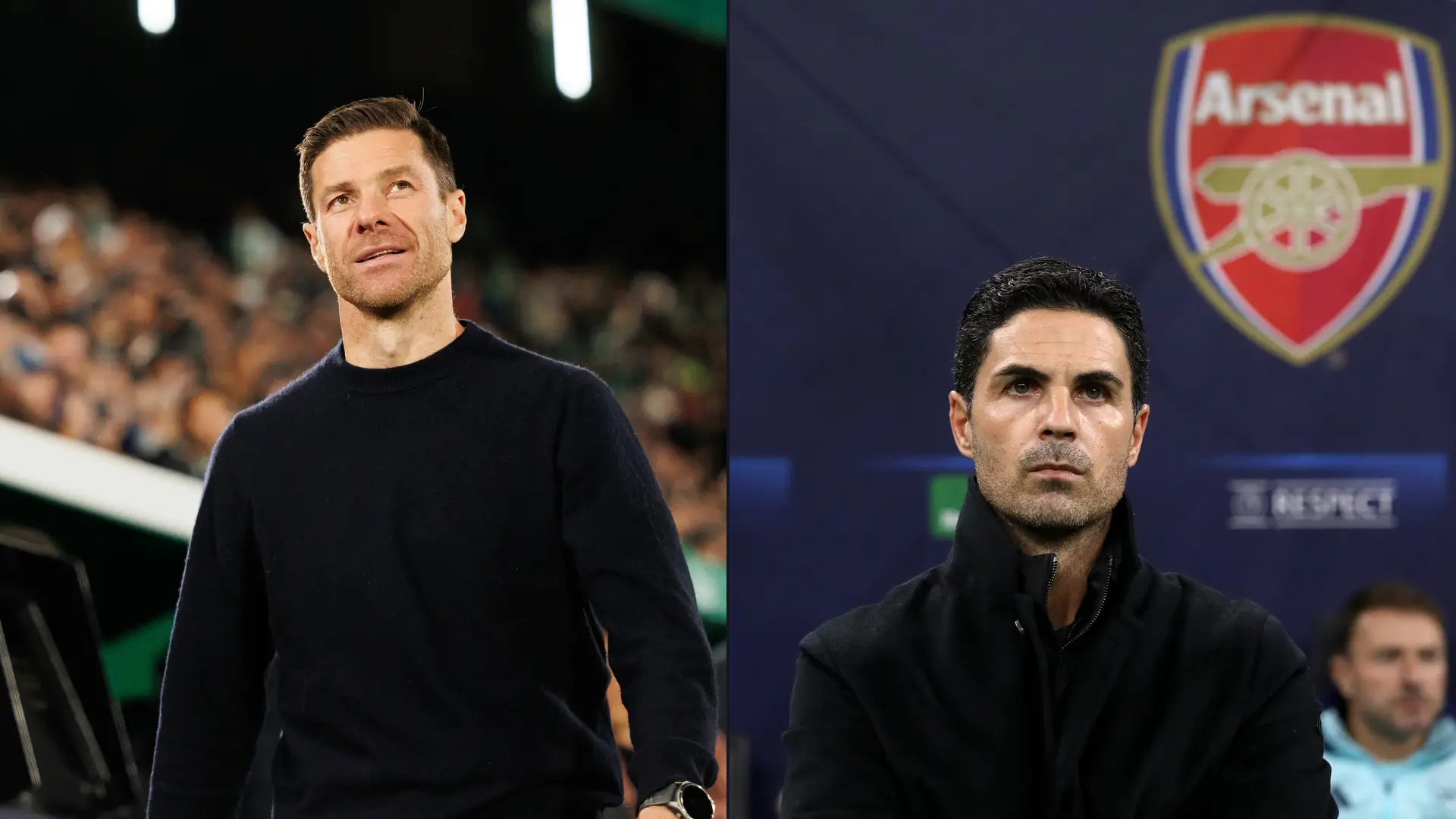
Arsenal vs Chelsea will place Mikel Arteta and Xabi Alonso on opposite touchlines, long after they learned football in the same corner of San Sebastián. One delivered Arsenal’s first Premier League title in 22 years; the other took charge of a Chelsea side being rebuilt in real time. On Sunday, September 6, at 11:30 a.m. ET, the childhood teammates will meet as Premier League managers for the first time. Their friendship connects the occasion. Their teams arrive with sharply different early-season relationships to control and risk.
Both came through Antiguoko, a neighborhood youth club founded in 1982. San Sebastián offered little room for youth pitches, so Antiguoko improvised. The club staged matches on La Concha and Ondarreta after the sea receded, then moved to the unforgiving gravel surfaces at Berio. The facilities were modest, but the teaching was precise: close control, combinations on the ground, tactical awareness, and collective responsibility. Those ideas stayed with Arteta and Alonso even as their careers carried them across Europe.
A shared education hasn’t produced identical teams. Arsenal and Chelsea have each taken six points from their first two league matches, yet their scorelines describe two very different starts. The champions have beaten Coventry City 3-0 and Aston Villa 1-0, scoring four without conceding. Chelsea have beaten Fulham 3-2 and Brighton 4-3, scoring seven and allowing five.
Arsenal’s 1-0 victory at Aston Villa followed the pattern that carried them through last season. Arteta’s side controlled territory, waited through an imperfect attacking performance, and found the decisive move after halftime. Eberechi Eze released Riccardo Calafiori, whose low cross reached Bukayo Saka in the six-yard area. Once Arsenal were ahead, Villa didn’t register a shot on target.
That ability to make a narrow lead feel larger than the score suggests has become one of Arsenal’s defining strengths. Secure positioning behind the ball supports their pressure. Set pieces create another route to goal, and their defenders rarely allow a match to fracture into repeated end-to-end attacks. Arteta’s version of control is built around reducing uncertainty.
Arsenal vs Chelsea and two ways to control a match
Alonso’s Chelsea have begun by accepting far more uncertainty. He has used a back three with wing-backs, placing Cole Palmer and Morgan Rogers around João Pedro in an attack designed to move forward quickly. The first goal of his league tenure arrived after 32 seconds at Fulham, when Palmer released João Pedro behind the defense. Rogers and Palmer added the other goals in a 3-2 win, and the roles were already distinct: Palmer creates, Rogers attacks space, and João Pedro can link the move or finish it.
The personnel around them has changed almost as quickly. Chelsea entered the season near the top of the Premier League squad-depth rankings for 2026/27, but abundance didn’t guarantee cohesion. Alonso arrived with a new goalkeeper in Emiliano Martínez, a new central defender in Maxence Lacroix, and a major new attacking option in Rogers. Enzo Fernández, Marc Cucurella, Nicolas Jackson, and Trevoh Chalobah have all left permanently. The coach, the spine, and the shape are being established at once.
Against Brighton, Chelsea raced into a 3-0 lead within 32 minutes before the match swung back toward the visitors. They finished with only 26 percent possession, conceded three times, and still found a fourth goal through Palmer. Two matches can’t define Alonso’s permanent philosophy, especially when the scorelines shaped how Chelsea managed possession. They show how his first side has operated when given open grass: recover the ball, find a forward early, and attack before the opposition can reset.
Arsenal are designed to deny precisely those conditions. Declan Rice protects the center, the back line squeezes the available space, and Arteta’s attacking structure is meant to leave protection in place when possession is lost. Palmer can still create through a crowded area, Rogers can run beyond the midfield, and João Pedro can turn an outlet pass into an attack, but Chelsea may receive fewer transition opportunities than they found in their opening two games.
The clearest pressure point could develop around Saka. Arsenal repeatedly work to isolate him on the right, while Chelsea’s shape asks the left wing-back and outside center back to divide responsibility for that channel. An extra defender can close Saka’s space. A wing-back caught too high, however, can leave the outside center back moving toward the touchline, which opens room for an underlap, an overlap, or a late runner inside.
The first goal may decide how Arsenal vs Chelsea unfolds. Chelsea scored almost immediately at Fulham and built their three-goal advantage quickly against Brighton. When opponents have had to advance, Alonso’s side have found space for Palmer, Rogers, and João Pedro. If Chelsea score first at the Emirates, Arsenal will have to take greater positional risks. If Arsenal lead, Alonso’s new team will need to sustain possession against a defense comfortable protecting small margins.
Recent history favors the hosts. Arsenal are unbeaten in their last nine Premier League meetings with Chelsea, winning six and drawing three. Yet this Chelsea side has been reconstructed too thoroughly for the fixture to feel like a continuation of the old cycle. Alonso is still discovering which combinations can hold up when a match becomes less forgiving.
Their shared history won’t settle the match. The more revealing contest is between two versions of the football education they received in the same neighborhood. Arteta tries to remove disorder from a game. Alonso’s early Chelsea have tried to profit from it. At the Emirates, one of those ideas will have to bend.