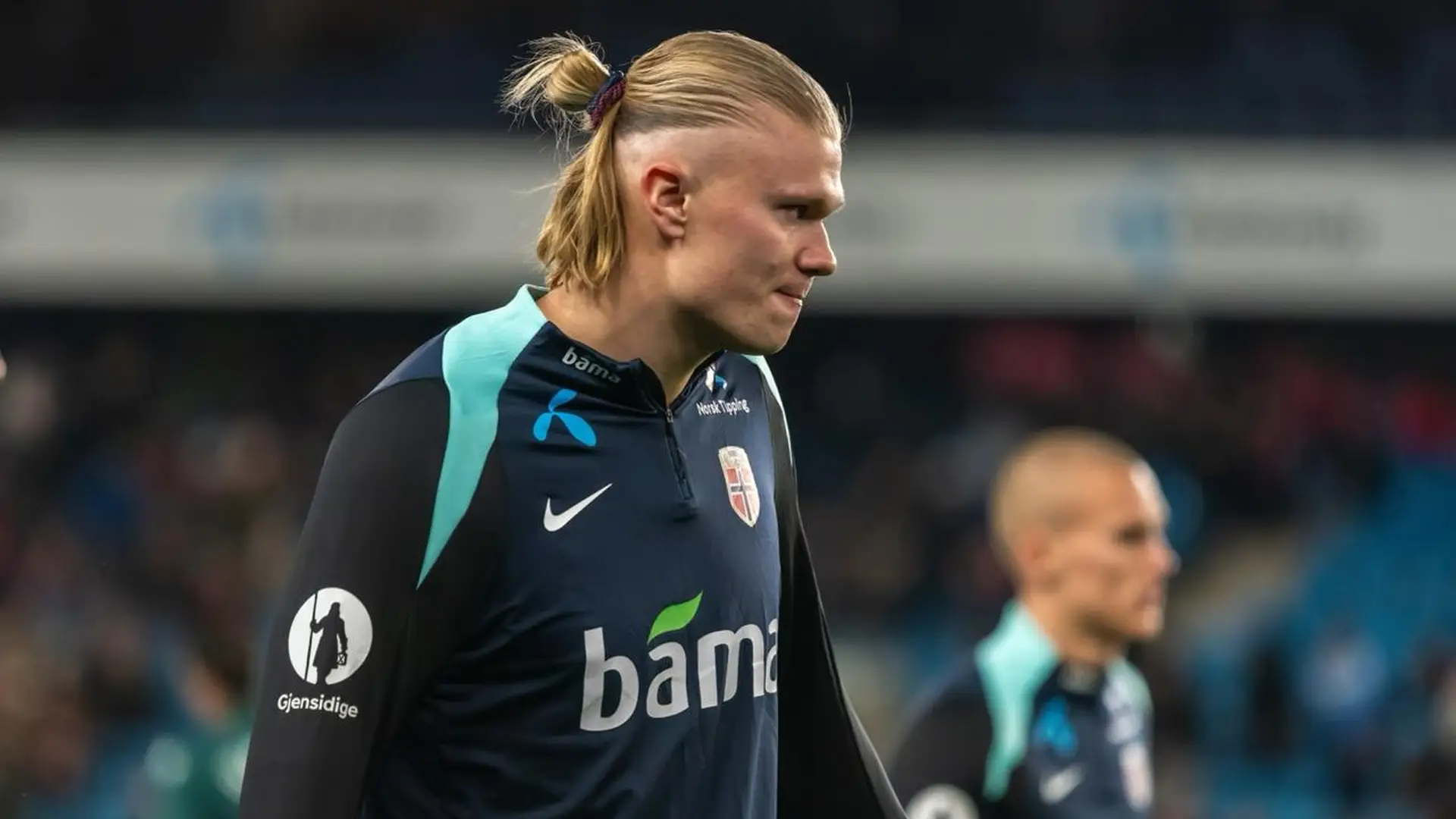
Erling Haaland didn’t need the 2026 World Cup to become famous. He arrived as Manchester City’s central striker and one of football’s most recognizable players. America still hasn’t produced a male soccer superstar with his global reach, but it has watched many of them through European club football. Haaland’s identity in the United States was still largely attached to Manchester City. This tournament has separated the player from the club.
Norway has given him a simpler and more immediate role. The country returned to the World Cup for the first time since 1998 with its record scorer leading the attack. Manchester City arrives with a league, a tactical system, a long season and a roster filled with international players. Norway’s story is narrower. Haaland scores, Norway advances. If he doesn’t, the country’s first World Cup in 28 years moves closer to its end.
The competitive case came first. Haaland has scored seven goals during Norway’s run to the quarterfinals. He sent Norway past Ivory Coast with an 86th-minute winner in the Round of 32, adding another decisive moment to a tournament in which his goals have carried direct consequences. Norway has never previously reached this stage of a men’s World Cup.
The American setting has also allowed Haaland to appear outside the usual boundaries of a match. During Norway’s stop in Dallas, he posted photographs wearing cowboy boots and a black hat. The images didn’t explain his appeal, but they placed an established European club star inside the geography of this World Cup. His Instagram account added nearly 18 million followers in roughly a month, including around five million during the 24 hours following the Brazil match. Those figures are global rather than a measure of American opinion, but they establish how sharply the tournament expanded his individual profile.
The tournament made Haaland easier to read
The clearest evidence arrived against Brazil. Haaland scored in the 79th and 90th minutes of Norway’s 2-1 win over Brazil, eliminating the five-time champions and sending his country into its first quarterfinal. It was the kind of performance that can redraw a player’s public identity in a single evening. Haaland was no longer being presented as the striker at the end of Manchester City’s moves. He was the scorer responsible for the most significant result in Norway’s World Cup history.
His football suits the compressed logic of a World Cup. At 6-foot-5, his physical presence is immediately visible. So are his speed, movement and finishing. Those qualities don’t require a season of tactical context to appreciate. In a knockout tournament, a single run or touch can alter the bracket, and Haaland has repeatedly supplied those moments.
This isn’t an origin story. Club football established Haaland as an elite scorer long before he reached North America. The World Cup has changed the presentation. Manchester City places him inside a powerful institution with expectations renewed every season. Norway places him at the center of a national event that hasn’t occurred in nearly three decades. The player is the same, but the surrounding story has become more personal and easier to follow.
That distinction shapes any description of this as his American breakthrough. It doesn’t mean Haaland was unknown in the United States before June. It means the tournament has allowed him to stand apart from the club, league and system that previously framed most of his work. His first World Cup has produced seven goals, a victory over Brazil and a quarterfinal against England, all while being staged in the countries and cities hosting the tournament.
Norway’s run may end against England or continue into the final week. The change in Haaland’s profile has already taken place. He entered the competition as a famous club footballer. The World Cup has presented him as something more singular, a record scorer carrying his country through elimination matches on an American stage.
His breakthrough didn’t depend on one broadcaster, one advertising campaign or one cowboy photograph. It came from the particular clarity of the World Cup: country, player, match, consequence. Haaland arrived with the reputation. This tournament has given the United States the fullest version of the man behind it.