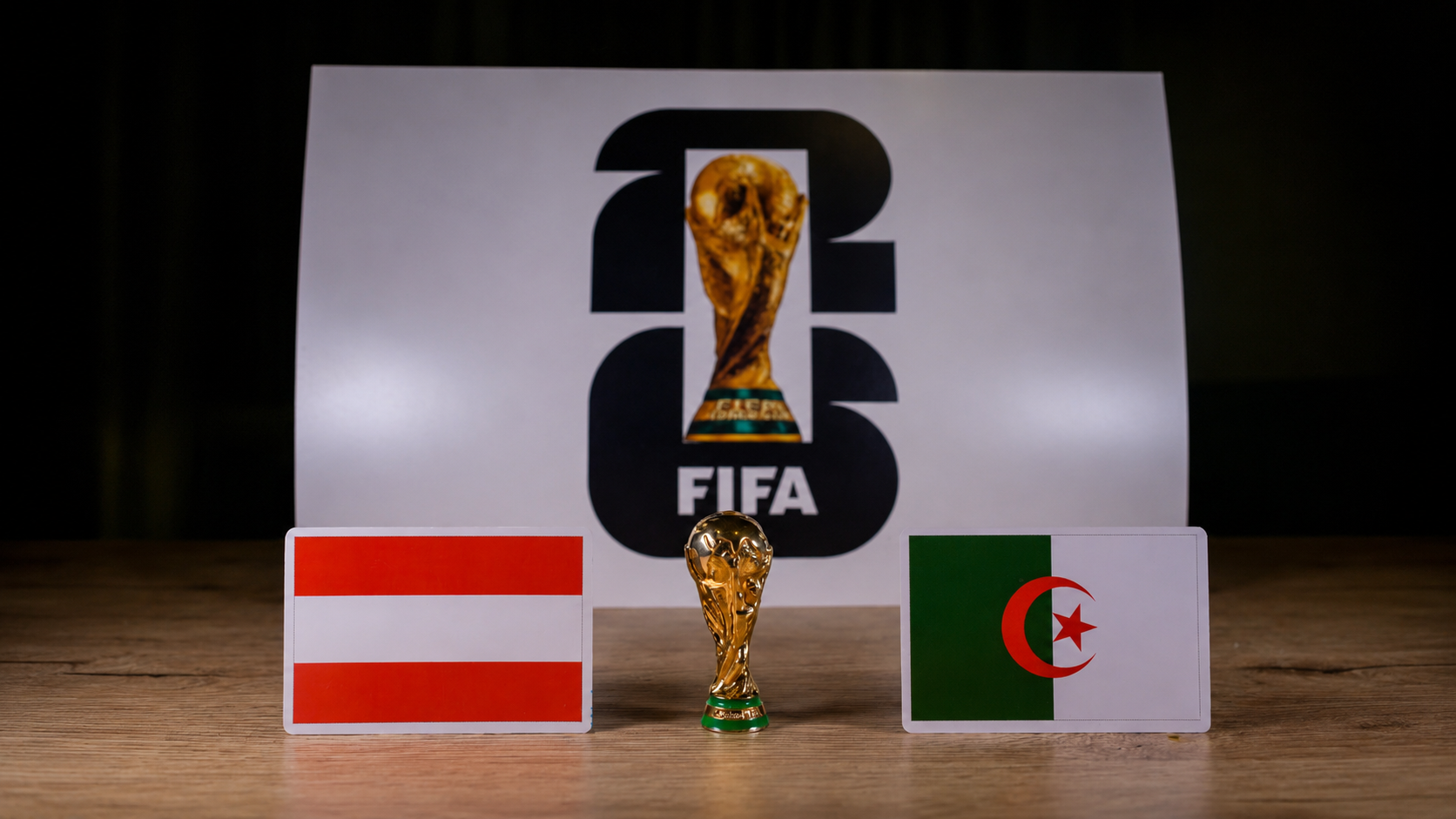
Algeria and Austria meet in Kansas City on Saturday with Group J still carrying consequence behind Argentina. The holders have already moved into the World Cup knockout rounds, Jordan are out, and the final fixture leaves Austria and Algeria to decide second place while the third-place table waits behind it.
The connection begins with a fixture Algeria did not play. In 1982, Algeria made its World Cup debut in Spain and beat West Germany 2-1, then lost 2-0 to Austria before beating Chile 3-2. Four points under the old system, with two for a win, left Algeria waiting on a final group match it could no longer influence.
West Germany and Austria played 24 hours later in Gijón. The arithmetic was clear before kickoff. A 1-0 West German win would move both European teams through and leave Algeria out on goal difference. Horst Hrubesch scored after 10 minutes, and the match settled into a result neither side needed to disturb.
Rabah Madjer later described the Algerian view with a sentence that still reads plainly: “Even though we had somewhat expected it, we were all angry, outraged and stunned.” Algeria protested, but FIFA ruled West Germany and Austria had acted within the rules. The controversy remained, because the rules had created the opening.
FIFA eventually closed that opening. The modern regulation requires the last two matches in each group to start at the same time, except in special circumstances. It was not only a scheduling adjustment. It was an admission that a tournament cannot ask teams to compete fairly while giving some of them knowledge their rivals never had.
The old flaw meets the expanded World Cup
The 2026 version is not the same case. Algeria are not waiting elsewhere, Austria are not playing West Germany, and both Group J matches will kick off together. Argentina’s first two wins, including Argentina’s 3-0 win over Algeria, have already decided first place. Algeria’s 2-1 comeback against Jordan and Austria’s earlier 3-1 win over Jordan left the final meeting to decide who finishes ahead of whom.
The calculation has still not disappeared. Under the expanded 48-team format, the 12 group winners and runners-up advance with the eight best third-placed teams. If Algeria beat Austria, they move above them. If Austria win, they take second. A draw leaves Austria ahead because the head-to-head would be level and Austria entered the match with the better overall goal difference, while Algeria would finish third on four points and depend on the third-place table.
The comparison has limits. The simultaneous kickoff rule prevents one side from carrying advance knowledge from a completed match. The expanded format creates a different kind of arithmetic, one where third place can still hold value and where knockout paths can matter before the group stage is fully complete.
For Algeria, the cleanest route is the one it did not have in Spain, beat Austria and remove the equation. No protest, no waiting, no result elsewhere deciding Algeria’s place. Austria have their own prize, direct entry to the round of 32 and control of second place in a group already topped by Argentina.
Gijón can’t be replayed. It can only be measured against what football changed afterward, and against the parts of tournament design that still invite calculation. Forty-four years after Algeria were eliminated by a result in a match they did not play, they meet Austria under the rule that Gijón forced into being.