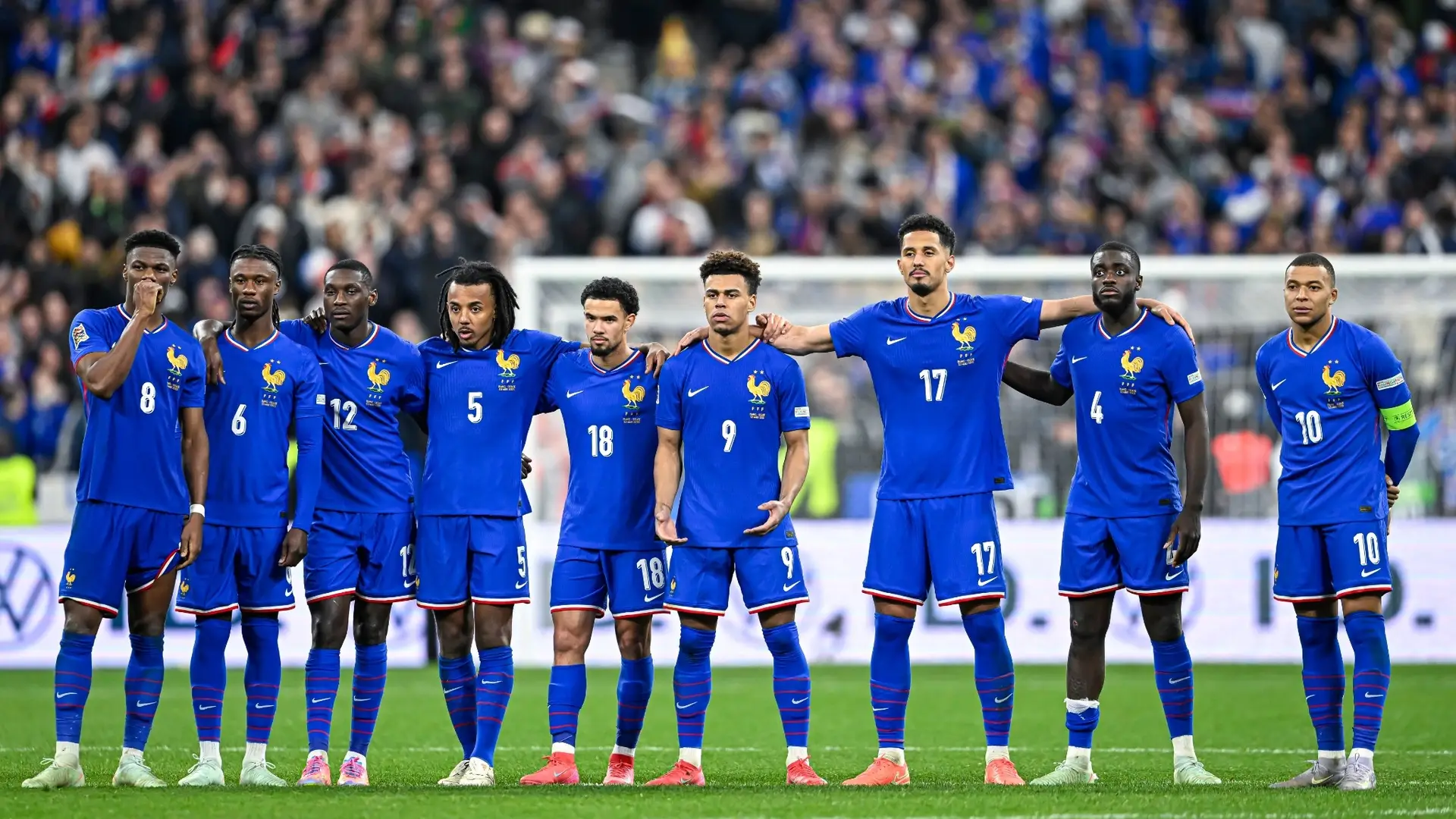
France have named their 26-man group for the 2026 World Cup, and the first reading is familiar: Kylian Mbappé still leads it, Didier Deschamps still favors security, and the defensive pool is deep enough to survive almost any single absence. The closer reading is less comfortable. This is not the France of Hugo Lloris, Raphaël Varane, Antoine Griezmann and Olivier Giroud. It is France after them.
The official list gives Deschamps three goalkeepers, nine defenders, five midfielders and nine forwards. Mike Maignan, Brice Samba and Robin Risser are the keepers. The defense has Lucas Digne, Malo Gusto, Lucas Hernández, Théo Hernández, Ibrahima Konaté, Jules Koundé, Maxence Lacroix, William Saliba and Dayot Upamecano. The midfield is N’Golo Kanté, Manu Koné, Adrien Rabiot, Aurélien Tchouaméni and Warren Zaïre-Emery. The attack is the statement: Maghnes Akliouche, Bradley Barcola, Rayan Cherki, Ousmane Dembélé, Désiré Doué, Jean-Philippe Mateta, Mbappé, Michael Olise and Marcus Thuram.
The 2022 comparison changes the tone. Lloris, Mandanda and Areola are gone from the goalkeeper group. Varane and Pavard are gone from the back line. Camavinga, Fofana, Guendouzi and Veretout are out of midfield. Griezmann, Giroud, Benzema, Coman and Kolo Muani are not in the attack. Some absences came through retirement, some through injury history, some through form, and some through selection logic. Together, they remove the old authority from the room.
There are still 11 players here who were part of the 2022 World Cup squad, and four 2018 world champions remain: Lucas Hernández, Kanté, Dembélé and Mbappé. That creates a strange balance. France have not become inexperienced. They have become differently experienced. The old tournament memory now sits beside a younger attacking group that asks to play faster and with more variation.
Deschamps’ clearest bet is not in attack
The obvious story is the forward line, but the sharper decision is the midfield. Deschamps has taken only five midfielders to a 48-team World Cup that will stretch squads across travel, heat management and the World Cup’s hydration break rule. It is a small number for a long tournament, especially with suspension risk and knockout extra time.
That choice says plenty about how he sees the team. Tchouaméni and Rabiot should give France the default base, with Kanté available when control needs to become containment. Koné adds carries and duels. Zaïre-Emery gives legs, calm and a long-term bridge. What the group does not have is a direct Griezmann successor. France no longer have one player who can connect midfield, press in advanced zones, play the final pass and tilt the emotional temperature of a match. Deschamps is asking several players to share that job.
That is where Olise, Cherki, Doué and Akliouche come into play. They are not just luxury attackers. They are France’s route around the missing connector. Olise can receive between lines without rushing. Cherki can slow a possession just long enough to find an angle. Doué brings acceleration from static positions. Akliouche gives another left-footed solution in the half spaces. Dembélé remains the chaos player, but now the chaos sits inside a wider creative committee.
The striker choice also explains the shape of the squad. Mateta is not Giroud, but his selection points toward the same practical need. France needed one forward who could live in the box, attack crosses, and change the physical profile of a match. Marcus Thuram can start centrally or drift from the left. Mbappé will shape the entire front line from wherever he begins. Mateta gives Deschamps a different final half-hour if the game narrows.
The defensive group looks like the safest part of the list. Saliba, Upamecano, Konaté and Koundé give France speed, strength and options at center back. Théo Hernández can still turn the left side into an attacking lane. Lucas Hernández and Digne offer more conservative solutions. Gusto gives the right side legs. Lacroix is the kind of tournament pick coaches value more than headlines do, because he can cover multiple center-back roles without forcing a structural rethink.
The risk is balance. A likely XI could be Maignan behind Koundé, Saliba, Upamecano and Théo Hernández, with Tchouaméni and Rabiot in midfield, then Dembélé, Olise and Mbappé behind Thuram. Against Senegal or Norway, Kanté could easily enter the starting equation. Against Iraq, Cherki, Doué or Barcola may become more useful from the opening whistle. The squad has answers, but some of them ask Deschamps to choose between control and expression earlier than he usually likes.
Camavinga and Kolo Muani are the most visible omissions because they still feel like World Cup players. France’s situation is different from the best XI you will not see at the 2026 World Cup, where nations failed to qualify and removed stars from the tournament entirely. Here, the team qualified with enough depth to leave high-level players outside. That is a privilege, but it also leaves less room for regret. If the midfield feels light or the attack lacks a direct runner late in a knockout match, the omissions will come back into focus.
France enter Group I against Senegal, Iraq and Norway with enough talent to win the tournament. The question is whether this version can manage the moments that used to belong to older voices. Lloris organized pressure. Varane settled the back line. Griezmann solved spacing. Giroud gave the attack a reference point. Deschamps has not replaced those roles one by one. He has built a squad that tries to replace them by committee. That can make France harder to read, and perhaps harder to stop. It can also make one bad night feel more exposed.