
Cameroon won’t take the field at the 2026 World Cup, but its kit story still belongs in this cycle. Few national teams have made such a small piece of fabric carry so much history. For Cameroon, the sleeve has been trim, flag, argument and, once, absence.
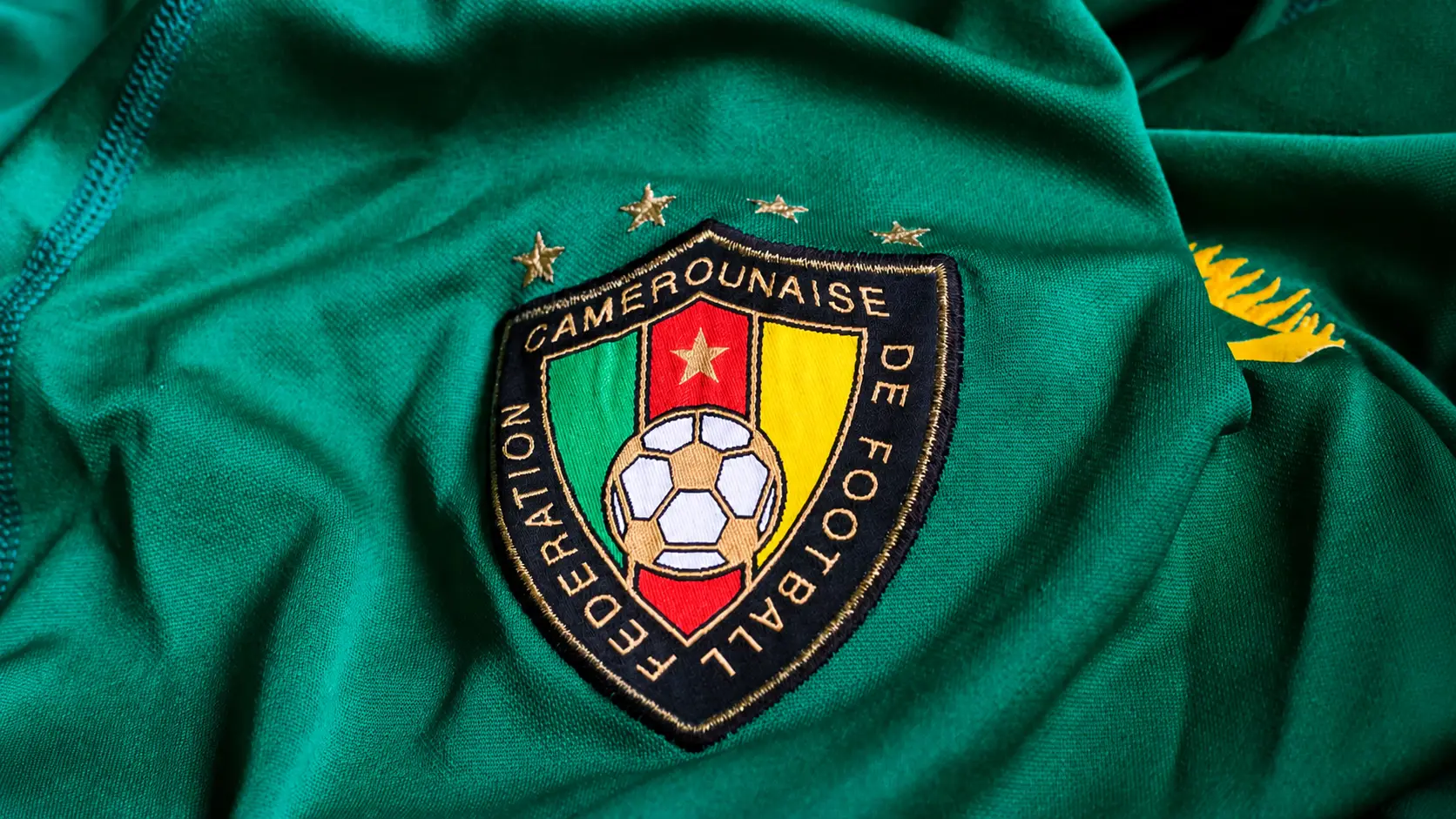
The shirt usually starts with the country’s visual grammar. Green, red and yellow are not decorative shortcuts. They come from the national flag, where green is tied to hope and the forests of the south, red to unity, yellow to sunshine and prosperity, and the central star to national unity. The lion adds the second language. The national team’s nickname is Les Lions Indomptables, and that identity has given kit makers a clear symbol to return to across generations.
Their first World Cup shirt, made by Le Coq Sportif in 1982, did not need much. It was green, with a yellow V-neck and yellow cuffs. The effect was spare and direct. The sleeve did the work of framing the shirt, giving the green body a national edge without turning the design into a flag costume.
By the 1990 FIFA World Cup, Adidas had Cameroon in a green and white striped shirt, part of a tournament that tied the team to its deepest World Cup run. Four years later, Mitre took the sleeve further. The 1994 shirt kept the green base but added a red polo collar with yellow and green geometric detail, then repeated that pattern on the cuffs.
By then, Cameroon’s sleeve had moved beyond being a finishing touch. The cuff could carry rhythm. It could hold national color. It could make a plain green shirt feel specific to one team.
The sleeve becomes the story
Puma gave Cameroon’s kit history its sharpest turn. In 1998, its first World Cup home shirt for the team used a green base, yellow panels, thin red cuff trim and a lion graphic across the chest. The sleeve still mattered, but the shirt was now part of a larger visual identity built around the animal on the crest and the name around the team.
Then came 2002. Cameroon wore a sleeveless Puma shirt at the Africa Cup of Nations, where they won the tournament. The idea looked closer to a basketball jersey than a conventional football shirt, and it shifted the design question from the edge of the garment to the absence of that edge. FIFA’s equipment rules required shirts with sleeves, so the World Cup version had black cloth added where the sleeves should have been.
The compromise gave the 2002 Cameroon shirt its lasting design importance. It was not just unusual. It exposed the boundary between kit design and football regulation. Puma’s partnership with Cameroon kept pushing at that boundary, later producing the first all-in-one kit for a football team and the Africa Unity Kit project in 2010. The sleeve episode was the cleanest version of the same idea, a design that forced the rulebook into the frame.
Cameroon’s later Puma shirts returned to the lion instead of removing fabric. The 2010 home shirt used red trim on the collar and cuffs, a yellow lion head graphic and a subtle shoulder pattern. In 2014, the shirt became denser, with a green base covered in lions and “CAMEROUN – LES LIONS INDOMPTABLES” text. The sleeve was no longer the only symbolic area. The whole shirt had become the surface.
The supplier story shifted again after Puma. Le Coq Sportif returned in 2019, reconnecting Cameroon to the brand that dressed its 1982 World Cup debut. One All Sports then supplied the 2022 World Cup kits after a dispute over the previous arrangement. On the home shirt, the cuffs returned to a direct flag treatment, green, red and yellow stripes with a yellow star placed in the red band.
The current chapter belongs to Fourteen, also styled 14Fourteen. Its 2025-26 Cameroon home kit keeps the design language familiar: a dark green base, red and yellow graphics, a yellow V-neck and tricolor sleeve cuffs. Cameroon will not wear it at the 2026 finals after losing to DR Congo in the CAF playoff, but it still extends the country’s long-running kit language into the 2026 cycle.
Viewed across four decades of World Cup kits, Cameroon’s sleeves have rarely been random. They have marked the flag, carried pattern, framed the lion and, in 2002, disappeared long enough to make the rules visible. The Indomitable Lions have worn many shirts, but the sleeve is where their kit history keeps leaving its most precise mark.