There was a time when Nike’s football business seemed less like a sponsorship operation than an authorship project. The Swoosh attached itself to players who made the modern game look quicker, sharper, and more stylized: Ronaldo, Ronaldinho, Thierry Henry, Cristiano Ronaldo, Kylian Mbappé. Nike did not own football. For years, though, it helped set the language of how elite football looked on screens and in stores.
The company is still too big for tidy decline narratives, but aura is not the same as scale. Nike’s fiscal 2025 revenue fell 10 percent to $46.3 billion. Nike Direct dropped 13 percent, with Nike Brand Digital down 20 percent. In the third quarter of fiscal 2026, revenue was flat on a reported basis and down 3 percent on a currency-neutral basis.
Nike’s mythology is built on momentum. A company that sells speed, certainty, and dominance cannot look uncertain without changing how its sports properties are read. Football has become one of the clearest places to see that tension, not because Nike disappeared, but because its old permanence has been interrupted.
Liverpool returned to Adidas for the 2025/26 season, replacing Nike in a deal worth about $77 million per year. Portugal moved to Puma after a Nike federation relationship that began in 1997. Those are not fatal losses. Nike still has more than enough elite inventory. They are, however, symbolic losses, and football branding runs on symbols as much as contracts.
The player story cuts closer. Lamine Yamal signed with Adidas in 2024, and Adidas later built the limited F50 LY304 signature boot around his connection to Rocafonda’s 304 area code. For Nike, the detail is uncomfortable. The brand that once turned young attacking players into global characters watched the most obvious teenage protagonist in European football enter the Adidas system before the 2026 World Cup cycle reached its peak.
Adidas has rebuilt the emotional bridge
Adidas’ case is not just sentimental. Adidas Brand revenue grew 13 percent currency-neutral in 2025 for a second straight year. Performance revenue rose 15 percent, with running up more than 30 percent and football growth tied to Predator and F50 footwear, on-pitch kits and culturally inspired collections. Lifestyle revenue rose 12 percent, helped by Terrace and retro running demand.
That combination gives Adidas a useful advantage. It can sell new performance products without severing them from old football memory. The Adidas World Cup 2026 shirts have leaned into national history, archive references and tournament familiarity. Nike’s 2026 federation kits, by contrast, arrived with an official emphasis on heritage, culture, identity and Aero-FIT performance cooling. The technology is important. The emotional read is quieter.
The rollout also absorbed a quality-control distraction. Nike examined a shoulder-seam design issue in several national-team shirts ahead of the World Cup, with performance unaffected but the aesthetic concern acknowledged. For a premium tournament kit, even a visual flaw becomes part of the larger judgment around execution.
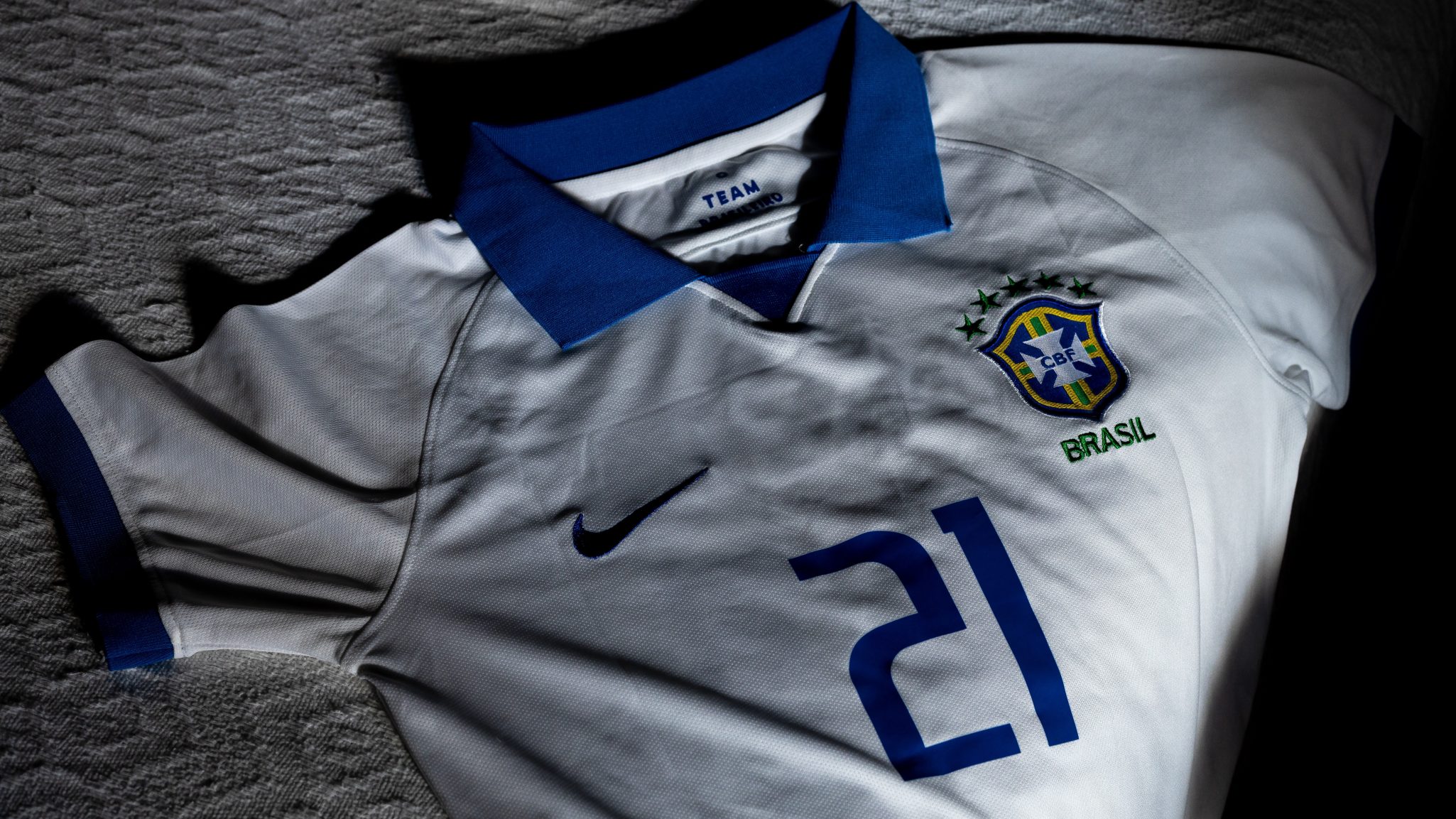
Nike’s counterargument remains powerful. The Germany deal begins in 2027 and runs through 2034, ending more than seven decades of Adidas supply to the German national team. Brazil extended with Nike through 2038 in a deal worth about $100 million a year plus royalties. Barcelona renewed its strategic relationship with Nike, keeping one of the sport’s defining club shirts inside the Swoosh portfolio.
The possible Champions League ball takeover may be just as important. Nike is in exclusive talks to supply UEFA men’s club competition match balls from 2027 to 2031, a property Adidas has controlled for 25 years. If completed, the deal would put Nike at the center of the competition’s recurring visual grammar. It would not restore aura by itself, but it would give Nike a weekly European canvas.
The diagnosis sits between relevance and feeling. Nike has not lost football relevance. It has lost some of its automatic claim on football imagination. Adidas currently has a cleaner bridge between product and pitch, with Messi as the elder icon, Jude Bellingham as a prime-age star and Yamal as the next generational bet. Adidas feels connected to football’s archive without feeling trapped in it. Nike, lately, has looked more like a company planning a reset than a brand already writing the scene.
The Swoosh still has the money, teams, athletes and institutional relationships to return to the center of the game. The next test is creative rather than contractual. Nike can buy visibility. Rebuilding its football aura will require something harder, a reason for the sport to feel different when the Swoosh appears.