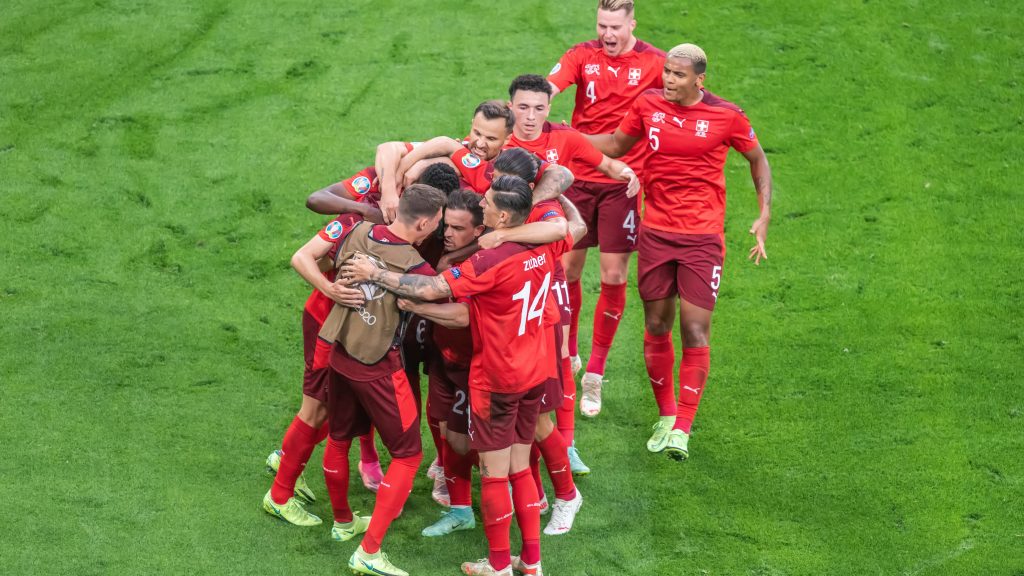
Switzerland’s group stage at the 2026 World Cup is shaped by both geography and their opponents. Their schedule takes them to Santa Clara, then Inglewood, and finally Vancouver. Following the team means planning for three cities instead of just one.
The draw adds a moving piece that will stay unresolved for a while. Switzerland are in Group B with Canada and Qatar, plus the winner of UEFA’s Path A playoff, which will be one of Bosnia and Herzegovina, Italy, Northern Ireland, or Wales.
The match schedule is set. Switzerland will play Qatar on June 13 at Levi’s Stadium in Santa Clara. Next, they face the UEFA Playoff A winner on June 18 at SoFi Stadium in Inglewood. They finish the group stage against Canada on June 24 at BC Place in Vancouver.
There’s some consistency for viewers: all three matches start at 3:00 p.m. Eastern Time. This makes it easier to plan around kickoff without having to adjust each time.
Switzerland’s football federation has always seen the national team as a project that brings together different languages. For example, they promote an official team song with fan slogans in German, French, Italian, and Romansh. This shows how Switzerland presents itself to the world.
What matters once the schedule is set
Switzerland’s World Cup history is clear. The men’s team has reached the quarterfinals three times—in 1934, 1938, and 1954—but has never advanced further. Every recent tournament run is compared to that benchmark.
The 2026 group could set up a high-stakes rematch, depending on who wins UEFA Path A. If Italy qualify, Switzerland will face them in the second group match. This is notable because Switzerland knocked Italy out of Euro 2024 with a 2–0 win, which changed how both teams are seen, even though their squads may change by 2026.
If you want to get to know Switzerland through its players, UEFA’s current squad list is a good place to start. It features coach Murat Yakin and several familiar names who have shaped Switzerland’s recent success.
In midfield, Granit Xhaka and Remo Freuler sit near the center of the team’s structure. In attack, recent squads have included players such as Ruben Vargas, Dan Ndoye, and Zeki Amdouni. At the back and in goal, Manuel Akanji, Ricardo Rodríguez, and Gregor Kobel are among the names that have appeared in the listed pool. This is not a World Cup roster, but it is a practical map of the players most tied to Switzerland’s current approach.
Not all of Switzerland’s rivalries are about geography. One notable matchup in recent tournaments is Switzerland versus Serbia, which has gained attention because of Balkan history and the backgrounds of some Swiss players. This game may not happen in 2026, but it helps explain why some Switzerland matches carry extra meaning.
For a follow guide, the most reliable signals of Switzerland’s matchday identity are the elements the federation itself has put into circulation. The official-song release is one of those markers, and it also points to a phrase that travels easily across broadcasts and official materials: “Hopp Schwiiz.”
A Switzerland guide also has to treat ticketing as its own category, separate from football analysis. In a ticketing notice aimed at Swiss supporters, the Swiss Football Association states that group-stage and potential knockout ticket sales open on December 11, 2025 at 5:00 p.m. Swiss time, after the December 5 draw in Washington, and that this sales phase runs until January 13, 2026 at 5:00 p.m. Swiss time.
The notice also makes it clear that FIFA handles ticketing and sets prices. The Swiss Football Association does not sell tickets or manage customer orders. So, the key is to use FIFA’s official ticketing process, keep your confirmations safe, and pay attention to deadlines.
For fans who want organized updates, Fankurve Schweiz shares information about meeting points, fan marches, and tickets. A general guide doesn’t need to predict what these events will look like in 2026. It just needs to show where to find those details when they’re available.
Switzerland’s official channels make it easy to follow team updates in different languages. The federation uses hashtags like #natimiteuch, #lanatiavecvous, and #lanaticonvoi in match coverage, which help fans find official updates.
To follow Switzerland in 2026, focus on the basics: know the schedule, keep an eye on who fills the last group spot, learn the key players, and handle ticketing within the set timeframes. The matches will decide the rest, but the structure is ready.