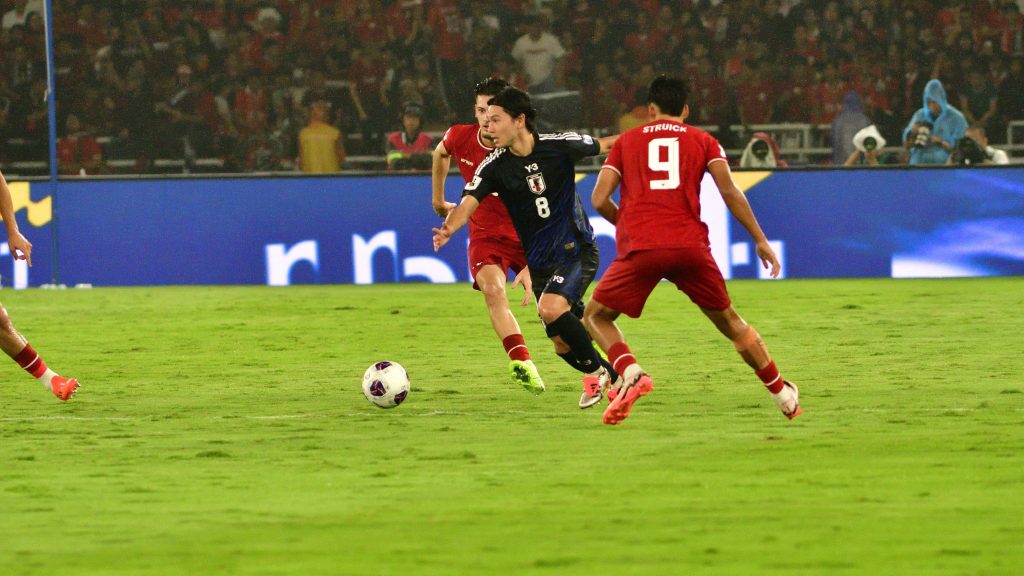
Japan didn’t just make it to the 2026 World Cup; they qualified early and made it clear they belong. On March 20, 2025, they beat Bahrain 2-0 and became the first team to qualify outside the three hosts. Daichi Kamada and Takefusa Kubo scored after halftime. This is their eighth World Cup in a row, so qualifying is now something fans expect, not just hope for.
The 2026 draw is simple. Japan, also called Samurai Blue, is in Group F with the Netherlands, Tunisia, and a UEFA Playoff Path B winner who will be decided in March 2026. If you want to keep up with them, pay attention to their travel: two group matches are in the Dallas area and one is in Monterrey.
The name “Samurai Blue” means more than just a nickname. It shows how Japan plays: with structure, teamwork, and control, but still keeping the game quick. Their style is built on a system that stays the same, even when the players change.
This is important because Japan isn’t just showing up in 2026. They have never made it past the Round of 16 at a men’s World Cup, and that has become a big part of their story. With the tournament growing to 48 teams and 32 moving on to the knockouts, it’s a little easier to get out of the group, but expectations are higher now. Japan Football Association president Tsuneyasu Miyamoto has even said the goal is to reach the final in North America, so just getting out of the group is no longer enough.
Let’s look at the schedule. Japan’s first match is on Sunday, June 14, 2026, against the Netherlands at AT&T Stadium in the Dallas area, starting at 3 p.m. Central and 4 p.m. Eastern. The second game is Saturday, June 20, in Monterrey at Estadio BBVA against Tunisia, with a late 10 p.m. local start, which is very late for U.S. viewers. The group stage ends on Thursday, June 25, back at AT&T Stadium, against the UEFA Playoff Path B winner, at 6 p.m. Central and 7 p.m. Eastern.
Two cities, three matches, and a challenge Japan has not overcome yet
The first match against the Netherlands will quickly show how ready Japan is to compete at the level they want. Playing the Dutch tests a team’s spacing and decision-making, and it will push Japan to prove their organization works under pressure, not just when they control the game.
The second match stands out for another reason. FIFA has marked Tunisia versus Japan in Monterrey as the 1,000th match in World Cup history. It also brings back memories of 2002, when Japan beat Tunisia in the group stage to reach the knockouts for the first time. Even though the teams and styles have changed, it’s a familiar milestone as Japan tries to make new history.
The third match is still unknown because Japan’s opponent will not be decided until the UEFA playoff finishes in March 2026. Until then, the best way to stay updated is to follow the playoff itself. Watching how it goes gives you an early idea of what kind of final group match Japan might have, and it could affect how they play the first two games.
After the schedule, the next thing to check is the roster. It’s better to focus on player roles instead of just the hype. In November 2025, Japan’s squad included Wataru Endo, a key midfielder. Kamada and Kubo were also there, each bringing a different way to create chances. Kamada is known for his timing and link-up play. He scored first in the Bahrain match that secured qualification. Kubo, who played for Real Sociedad at the time, is the kind of attacker who can change a game with a single run or a smart decision in the final third.
The same squad also had attackers who have played key roles for Japan in past tournaments. Ritsu Doan and Takumi Minamino were both included in November 2025, and Ayase Ueda brought experience from playing club football in the Netherlands. The point is not to predict the final roster months in advance, but to know the core players who usually step up in big matches and to watch for them when the tournament is down to just three games.
Japan’s late-2025 call-ups also included defenders and fullbacks like Kou Itakura, Tsuyoshi Watanabe, Ayumu Seko, and Yukinari Sugawara. Many of these regulars were playing in Europe at the time. Japan’s ability to rotate players without losing their structure is important in a short tournament. Depth might not stand out, but at the World Cup, it often means staying strong from the first match to the last. Watching the newer names before June helps you notice them.
Japan’s November 2025 selections included midfielders like Ao Tanaka and Kaishu Sano, along with first call-ups for Sota Kitano and Keisuke Goto. These new additions are worth watching because they show the coaching staff is still testing new players, even after qualification is secure.
Matchday is the easiest part of following Japan. The team always wears the same color, the fans are organized, and the chants are easy to join. “Nippon Ole” is a popular chant, along with “Vamos Nippon” and “Nippon cha cha cha.” You don’t need to know much to join in, which helps Japan’s match atmosphere connect with fans everywhere.
There’s another detail that is now part of Japan’s World Cup identity. At Qatar 2022, FIFA showed Japan fans staying after matches to clean up their section. If you go to see Japan in 2026, the best way to honor this is to treat it as a normal habit. Bring a small bag, clean your area, and leave quietly.
To watch like a local, you don’t need to find a special bar or hidden spot in the host city. Just follow the team’s official channels to plan your week. The Japan Football Association’s Samurai Blue outlets and JFATV share squad news, training videos, and official updates. In Dallas and Monterrey, do the same: check the host city and FIFA events as they are announced, then look for Japanese community groups and public viewing events as June gets closer.
Japan’s rivalries are not the main focus in Group F, but they do affect how people see the team. South Korea is their biggest regional rival, and Australia has become a regular high-stakes opponent over the years. These tough matchups explain why Japan is so focused on structure and small details. They have learned that even small mistakes can have big consequences in tournaments.
In some ways, following Japan in 2026 is easier than usual. The group stage is in only two cities. The first opponent is set, the second match has historical meaning, and the third will be decided in March. But the bigger question remains: Japan has qualified so often that just being there is no longer news. The real story is whether this summer will finally break through the barrier that has stopped them for decades.