Portugal’s 2026 World Cup group stage is set across two American cities, with a schedule that keeps the team in one place for the opening stretch before shifting to South Florida. In Group K, Portugal will face Uzbekistan, Colombia, and a fourth opponent listed as “FIFA Playoff 1,” a qualifier that will be determined through FIFA’s playoff pathway. Two of Portugal’s three group matches are scheduled for Houston, with the third in Miami.
For a team that has spent the last two decades living under unusually bright scrutiny, the on-field assignment is clear and the off-field challenge is familiar. Portugal arrive at another World Cup with the expectation that their talent should translate into a deep run. Their modern record includes major trophies, but their World Cup history still has a stubborn headline: the program’s best finish remains third place in 1966.
Inside Portugal, the national team is often referred to as “Seleção das Quinas,” a name tied to national symbolism and the team’s role as a cultural touchstone. The last ten years have also reshaped what the team represents internationally. Winning Euro 2016 established Portugal as a champion in a way that earlier generations, for all their quality, never managed to seal. Later Nations League success, including a title in 2025, reinforced that this team can finish tournaments.
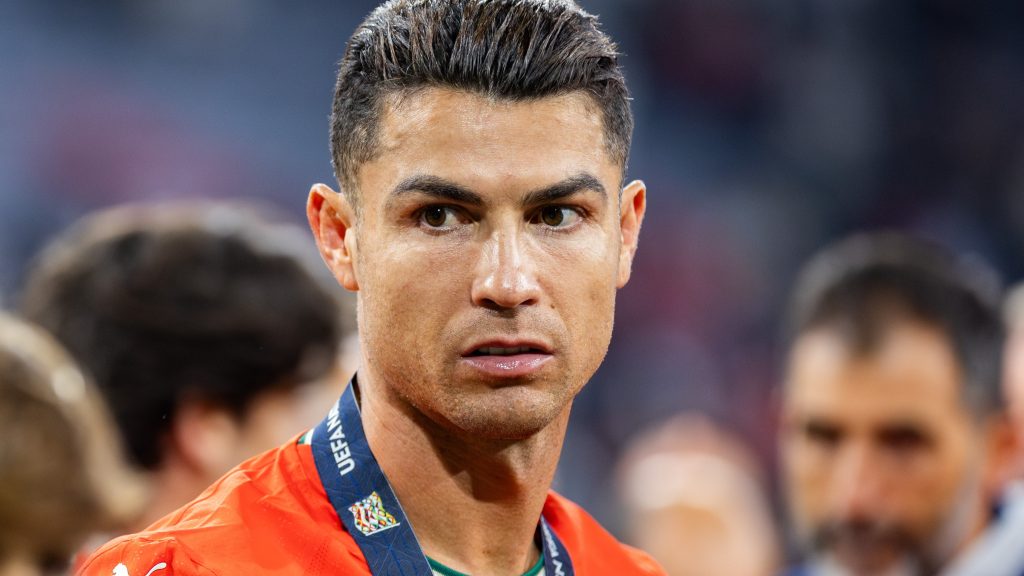
That matters heading into 2026 because Portugal are balancing continuity and change in a way few national teams can avoid. Cristiano Ronaldo remains a defining part of the story, even as the team’s identity increasingly runs through its midfielders and fullbacks rather than one central star. Portugal also head to North America with a recent data point that matters in knockout football: the 2025 Nations League final against Spain ended 2–2 and was decided on penalties, with Portugal lifting the trophy after holding their nerve. The period leading into this cycle also includes real loss. Forward Diogo Jota died in a car crash in July 2025, a fact that sits in the background of Portugal’s current era and the way it will be remembered.
Following Portugal well in 2026 means treating the tournament as more than a lineup graphic and a highlight clip. It is paying attention to where the games are, how the bracket routes the group’s top finishers, what official public viewing options exist in host cities, and which players are shaping matches even when the camera is elsewhere. If you build your plan around those details, Portugal become easier to track and easier to understand, whether you’re watching from a stadium seat, a fan festival screen, or a living room.
What the 2026 route looks like on the ground
Portugal’s group stage begins in Houston on June 17, 2026, with a match scheduled for 17:00 GMT, followed by a second Houston match on June 23 at 17:00 GMT. The third group match is set for Miami on June 27 at 23:30 GMT. In practical terms, those kickoff times translate cleanly for viewers in the host region, with midday starts in Houston and an evening start in Miami. For viewers in Portugal, the Houston games land early evening, while the Miami match pushes past midnight in Lisbon because of the time difference.
The venues matter because they shape the experience of following a team in person. Houston’s World Cup matches are set for NRG Stadium, and Miami’s for Hard Rock Stadium. Portugal’s placement also comes with a defined bracket logic after the group stage. The Group K winner is routed into a Round of 32 match in Kansas City, while the Group K runner-up is routed into a Round of 32 match in Toronto. That mapping gives a Portugal follower a straightforward decision tree: group placement determines whether the next stop is the central United States or Canada.
For readers who will be in Houston or Miami without match tickets, the most reliable anchor is the official public viewing infrastructure. Houston’s FIFA Fan Festival is planned for East Downtown, commonly referred to as EaDo, positioned as the city’s central fan site for match viewing and tournament programming. Miami’s FIFA Fan Festival is planned for Bayfront Park, with dates listed from June 23 to July 5. Those official sites offer a predictable way to watch matches in a World Cup environment that is designed for the tournament, not retrofitted for it.
Outside the host cities, Portugal’s North American footprint is easiest to find through established Portuguese communities and organizations. Newark’s Ironbound neighborhood is widely recognized as a Portuguese and Lusophone center, and Toronto has a neighborhood commonly known as Little Portugal. In South Florida, the Portuguese Club of Miami is an identifiable community institution. None of these places guarantees a particular viewing experience, but they do give a follower a practical starting point for finding Portuguese-language community hubs and tournament programming tied to Portuguese cultural life.
On the field, Portugal are easiest to follow when you know where the game is being organized. UEFA’s own framing of the team highlights a midfield core that includes Vitinha, João Neves, and Bruno Fernandes. Watching those players clarifies whether Portugal are controlling a match or simply occupying it. It also pulls attention toward the sequences that decide tournament games: how Portugal progress the ball under pressure, how quickly they create chances once possession turns, and how they manage tempo when the match tightens.
Recent finals also point to roles that matter at the World Cup, even when they are not the first names casual viewers mention. In the 2025 Nations League final against Spain, Nuno Mendes scored and received player-of-the-match recognition in reporting around the game. In the penalty shootout, goalkeeper Diogo Costa produced a decisive save. Those are the types of contributions that translate directly to World Cup knockout rounds, where a fullback’s one decisive action or a goalkeeper’s one correct read can tilt an entire run.
Portugal’s matchday culture can be described without guessing at emotion, because at least part of it is documented. UEFA has highlighted “A Minha Casinha” as a song associated with Portuguese supporters in the modern tournament era and has published lyrics in that context. If you are watching a Portugal match and you hear the chant cycle into a melody that sounds more like a communal song than a typical stadium refrain, that reference point helps you identify what you are hearing and why it has become attached to this team’s recent history.
Rivalries also shape how Portugal are covered and how their matches are framed. Spain is the obvious neighbor and the fixture most commonly described as the Iberian Derby, with the added relevance that Portugal’s most recent Nations League title came against Spain in a final settled by penalties. France remains a defining opponent in Portugal’s modern story because Portugal beat France to win Euro 2016, their first major international trophy. In 2026’s group context, Colombia is the opponent with the clearest potential to define Portugal’s early tournament positioning, simply because it pairs a deep talent pool against a team that also expects to play deep into July.
If you are watching from the United States, broadcast access is unusually straightforward for a World Cup. Fox holds the English-language rights, and NBCUniversal’s Telemundo holds Spanish-language rights, with streaming available through Peacock. For viewers outside the U.S., rights vary by territory and should be confirmed closer to the tournament through local listings and FIFA’s official information, since broadcast arrangements are territory-based and updated through formal rights processes.
Portugal’s 2026 group stage offers a rare advantage for followers: the geography is contained, the bracket mapping is clear, and official public viewing sites are defined in both host cities. If you keep those logistics in focus, learn the midfield names that shape the match, and recognize the documented elements of Portugal’s tournament culture, you will be able to track the team with clarity from the opening kickoff in Houston through whatever the bracket allows next.