The Democratic Republic of Congo is heading back to the World Cup for the first time since 1974. The return was secured on March 31, when DR Congo beat Jamaica 1-0 after extra time in Guadalajara, with Axel Tuanzebe scoring the winning goal. The result sent the team into the 2026 tournament, where it will face Colombia, Portugal, and Uzbekistan in Group K.
That victory ended a 52-year absence from football’s biggest stage. It also opened space for another story to take shape, one that has less to do with formations or selection decisions and more to do with how a national team chooses to define itself.
In the aftermath of qualification, reports circulated that DR Congo’s players asked President Félix Tshisekedi to allow a supporter known as Lumumba to accompany the team to the World Cup, even if that meant formally including him in the delegation. The request has been widely reported, but there has not yet been a clear official confirmation that it has been approved.
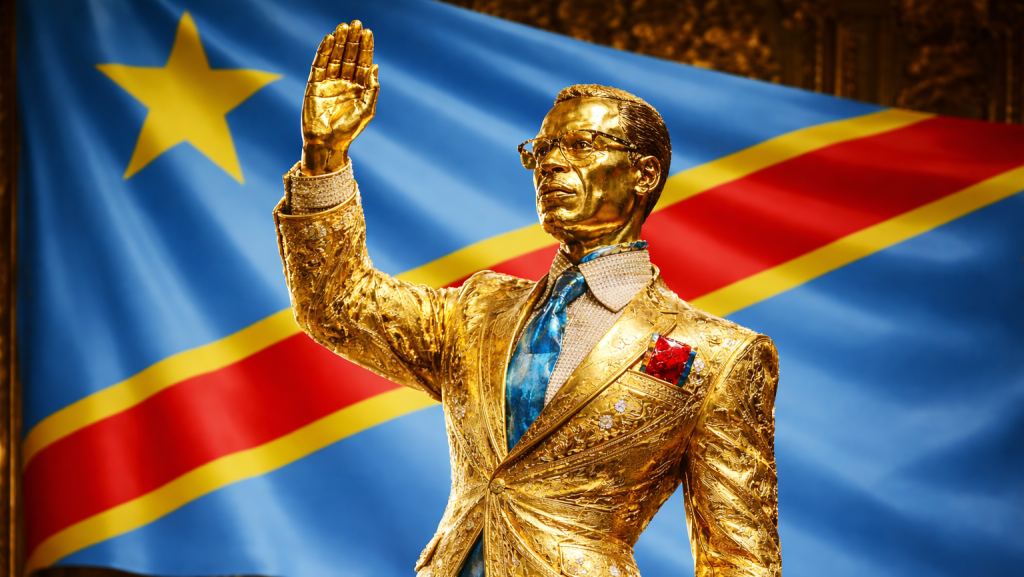
Lumumba is not an unknown figure who appeared only after qualification. He is Michel Nkuka Mboladinga, also known as Lumumba Vea, a supporter who became widely recognized during the Africa Cup of Nations for standing motionless in the pose of the Patrice Lumumba memorial statue in Kinshasa.
That image carries weight beyond football. Patrice Lumumba, Congo’s first prime minister, remains one of the country’s most important political symbols. By adopting that pose, Mboladinga turned himself into something more than a visible fan. He became part of the team’s broader visual identity during a period of national attention.
A request that remains symbolic until it becomes official
Mboladinga has explained his role in simple terms, saying he stands still to give strength and energy to the players. That matters because it frames his presence as an intentional act of tribute and encouragement, not just performance.
His place in this story became more pronounced because he was not in Mexico for the qualifying match itself. Reports said he tried to travel through Kenya and Ethiopia in an effort to secure a visa in time for the playoff against Jamaica, but he was unable to complete the process before kickoff.
That absence gives the players’ reported request a clearer meaning. If they did ask for him to be included in the delegation, the gesture was not merely decorative. It would have been an attempt to ensure that a figure closely associated with the team’s recent journey would not miss the World Cup in the same way he missed the match that sent them there.
There is also a practical reality beneath the symbolism. World Cup delegations are tightly managed, shaped by accreditation rules, federation structures, security requirements, and tournament logistics. A supporter does not become part of an official delegation through sentiment alone. It would require authorization and administrative approval.
That is why the distinction matters. A reported request is not the same as a confirmed arrangement. For now, Lumumba’s presence remains part of the story around DR Congo’s qualification, not yet a formal part of the World Cup plan itself.
Still, the episode says something important about the nature of international football. National teams do not travel with only players and staff. They also carry memory, history, and symbols that help explain what the team means at home.
For DR Congo, the 2026 World Cup will already be historic. Whether Lumumba ultimately makes the trip or not, his presence around this campaign has become part of the meaning of the moment. What remains unresolved is whether that symbolism will stay in the background, or move into the delegation itself.