Every World Cup leaves behind a few images that last. Sometimes it’s a goal. Sometimes it’s a shirt. Sometimes it’s the ball itself.
That’s what makes this recent run of official World Cup balls worth revisiting, especially now that Trionda has been unveiled for 2026. These designs do more than decorate a tournament. They help shape its visual identity, and in some cases, they come to represent the way that World Cup felt on the field.
The modern sequence begins with Teamgeist in 2006. It looked like a break from the past because it was one. Adidas moved away from the traditional panel structure and introduced a more seamless bonded design, pushing the World Cup ball further into the modern engineering era. Looking back, Teamgeist feels like the point where the tournament ball stopped being a familiar object and started becoming a statement.
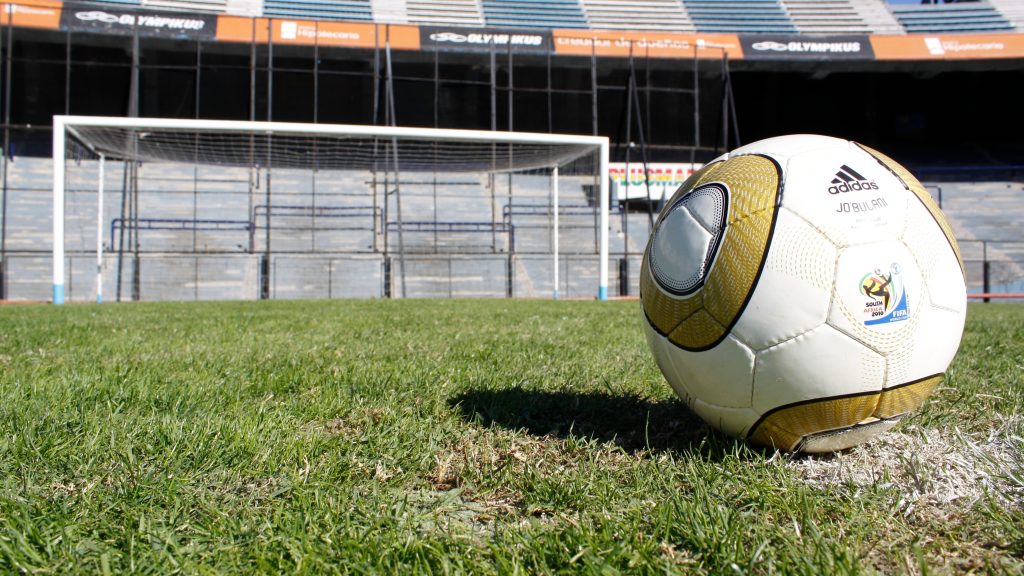
Then came Jabulani in 2010, the ball that still casts the longest shadow over this conversation. It was bold in appearance, but what made it unforgettable was the way it moved. Its construction created a flight pattern that felt less predictable than what players and goalkeepers had come to expect, and later aerodynamic analysis helped explain why. Jabulani didn’t just become part of the tournament’s branding. It became part of the tournament’s story.
That matters because every World Cup ball since has been judged, in one way or another, against the memory of 2010. Jabulani turned the match ball into something larger than a design object. It became a performance question.
How the World Cup ball became part of the game itself
Brazuca arrived in Brazil in 2014 as a more controlled answer to that moment. Adidas adjusted the structure and surface with stability in mind, aiming for a ball that still felt modern but behaved in a more consistent way at elite speed. If Jabulani made the ball feel volatile, Brazuca restored a sense of order.
Telstar 18, introduced for Russia 2018, took a different route. It looked backward and forward at the same time. Its visual design nodded to one of the most recognizable balls in tournament history, while its embedded NFC chip pointed toward a more connected future. By then, the World Cup ball was no longer just a piece of sporting equipment or a branding exercise. It was also part of football’s technology story.
Al Rihla continued that shift in Qatar in 2022. FIFA framed it with movement and journey in mind, while the broader tournament context pushed the ball further into the world of tracking, data, and officiating technology. At that stage, the official match ball was carrying several jobs at once. It had to perform, symbolize, and integrate into a more modern version of the sport.
Now comes Trionda, the official ball for the 2026 World Cup across the United States, Mexico, and Canada. Its design is meant to reflect the scale and energy of a three-host tournament, with a color palette tied to the host nations and a presentation that leans heavily into identity. It arrives as the latest step in a design line that has become increasingly self-aware about what a World Cup ball is supposed to represent.
Still, Jabulani remains the reference point. Teamgeist signaled a new design era. Brazuca brought the conversation back toward control. Telstar 18 and Al Rihla reflected football’s technological turn. Trionda is now being asked to carry the symbolism of a continent-sized World Cup. But Jabulani is the one that changed the standard. It made the ball impossible to treat as background detail again.