
Mexico has never needed to explain why it belongs at the center of a World Cup.
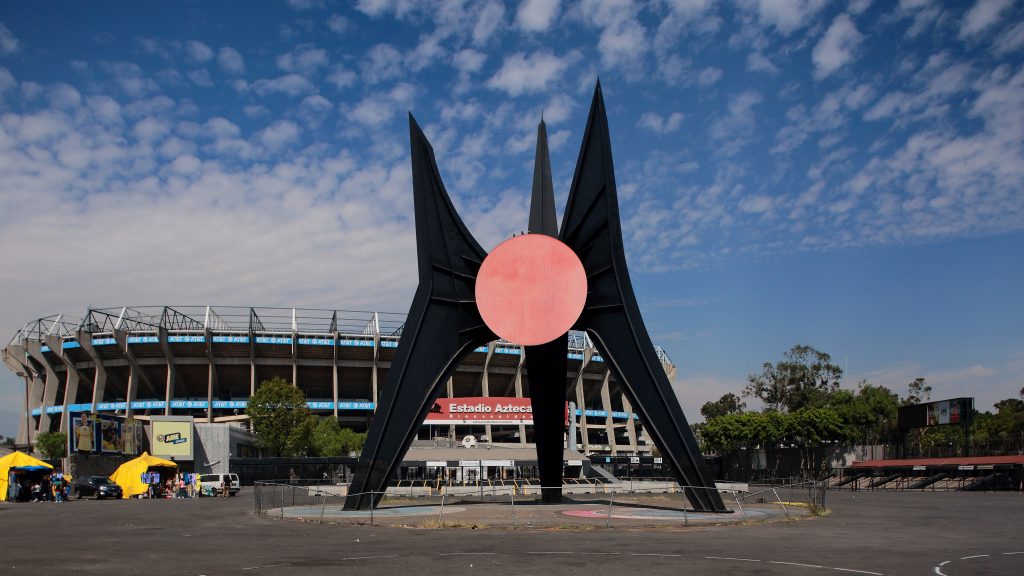
The country carries too much of the tournament’s memory for that. Too much history, too much symbolism, too much emotional weight. Estadio Azteca, more than most venues anywhere in the game, already exists in football’s permanent language. Before a ball is kicked in 2026, it already means something.
That is what makes the present moment more delicate than it first appears.
On paper, Mexico remains one of the pillars of the tournament. It will host matches in three cities. Mexico City will stage the opener. The venue is back in use. The planning continues. Officially, the shape of the event is holding.
But World Cups are not remembered only for what is scheduled. They are also remembered for what the preparation begins to reveal.
When Estadio Azteca reopened for the scoreless Mexico-Portugal friendly on March 28, it should have felt like a straightforward return, a familiar stadium stepping back into view ahead of football’s biggest month. Instead, the day arrived with a more unsettled mood. Earlier that same day, a man died after falling from a box-seat area inside the stadium. Outside, protests added another layer of tension to an occasion that might otherwise have been framed as uncomplicated reassurance.
History still matters, but it does not resolve everything
That is the quieter truth beginning to emerge around Mexico’s role in 2026.
For months, much of the broader conversation around the World Cup has centered on the United States, on visas, politics, and the mechanics of hosting under unusual public pressure. Mexico, by contrast, has often seemed to benefit from familiarity. It feels like football. That tends to produce confidence before questions.
Yet staging a tournament of this scale depends on more than confidence. It depends on the less romantic parts of preparation, the systems that sit underneath the spectacle. Transport. Crowd flow. Emergency response. Public safety. The relationship between a host event and the communities expected to absorb it.
That is why the reopening mattered beyond the match itself. It was not simply a symbolic return. It was a glimpse of the event in operational terms, a reminder that footballing stature and logistical readiness are not the same thing, even when they exist side by side.
The same sense of pressure extends beyond the capital. Guadalajara, another host city, has already drawn attention over security concerns during the build toward the tournament. On their own, those concerns do not amount to a verdict. They do, however, suggest that readiness is being assembled in full public view, with less margin for error than the branding of a World Cup usually allows.
None of this requires a dramatic conclusion. Mexico may still host a successful tournament. It may still provide exactly what the World Cup has always found there, scale, atmosphere, and a kind of footballing gravity that few countries can match.
But the reopening of Azteca offered a reminder that history, however powerful, is not a substitute for the practical work beneath it. Tradition can frame a tournament beautifully. It cannot, by itself, steady every pressure that comes with it.
That may be the real significance of this stage of the story. Not that Mexico’s place in the World Cup is in doubt. It is not.
The more interesting question is whether one of football’s most resonant hosts can translate that history into the harder forms of readiness the modern tournament demands, and whether the strains already visible now prove temporary, or quietly predictive.