On April 16, the Arsenal great turns 49, and his legacy still sits in a rare place where football, image, and timing all seem to belong to the same story.
Freddie Ljungberg turns 49 on April 16, and the easy way to remember him is through the numbers. He made 328 appearances for Arsenal between 1998 and 2007 and scored 72 goals, a return that places him securely among the club’s defining figures of that era. He was also central to one of Arsenal’s most productive stretches under Arsène Wenger, particularly in 2001-02, when he scored 17 goals in all competitions from midfield.
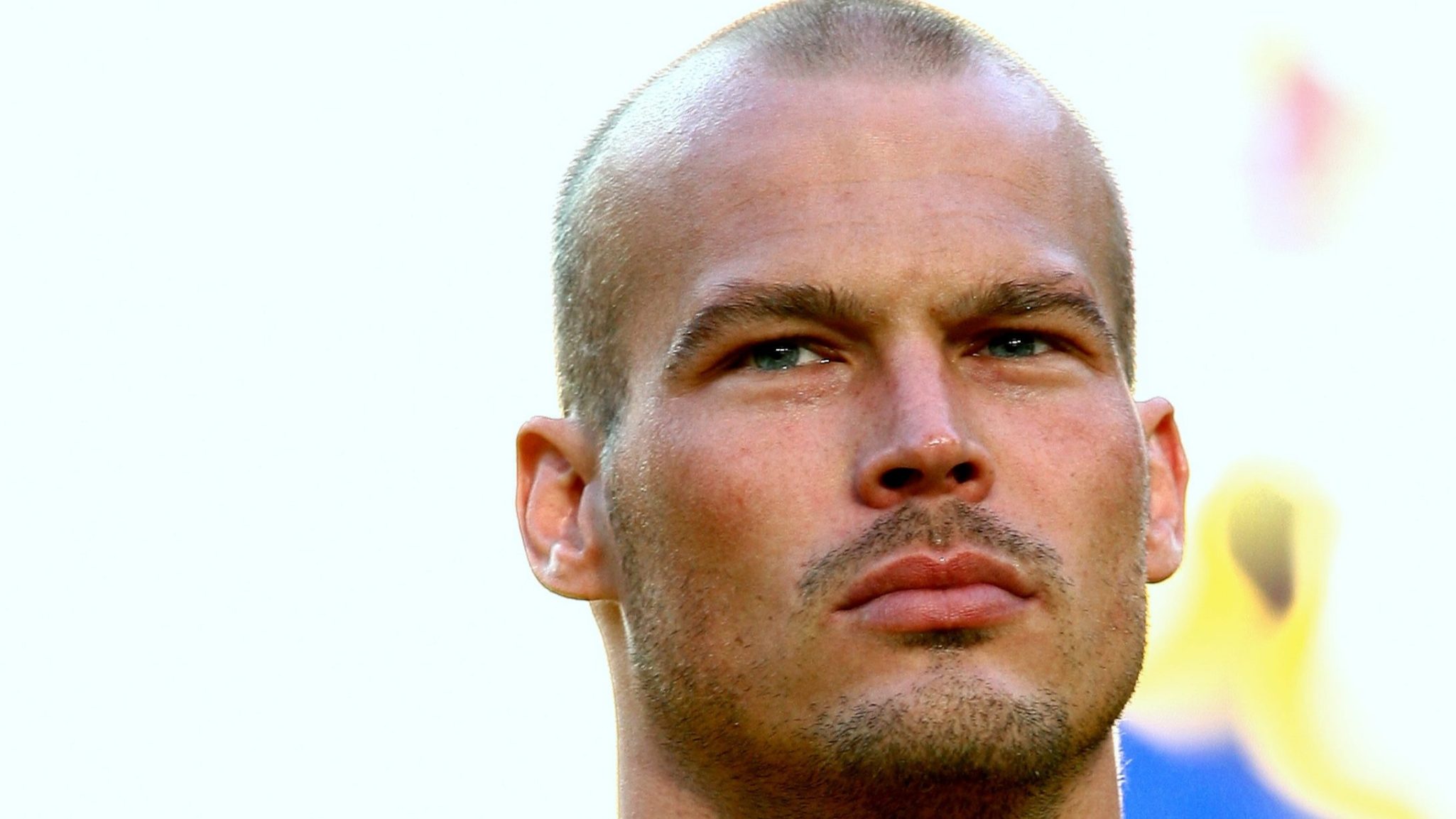
But Ljungberg’s place in football history was never built on production alone. He remains one of the clearest examples of a player whose image felt tied to his football rather than layered on top of it. The hair, the posture, the severity of his expression, the clarity of his movement, all of it created a profile that was unusually coherent. It did not feel like a branding exercise. It felt like an extension of the player Arsenal had signed from Halmstad in 1998.
Style in football is elastic. Sometimes it means clothing. Sometimes it means presentation. Sometimes it means the way a player moves through a match. With Ljungberg, it meant all three at once. He became only the third player in FA Cup history to score in consecutive finals, which says something important about him. He had flair, but it arrived with end product.
His best football often came from timing rather than spectacle. Wenger’s great Arsenal side had stars everywhere, but Ljungberg’s contribution was distinct. He attacked space with precision, scored from midfield, and gave the team a different rhythm from wide areas. Sol Campbell later described Ljungberg and Robert Pires as crucial to Arsenal’s success from those positions, which fits the historical record. Ljungberg was not ornamental. He was essential.
The visual side of his legacy became unavoidable by the early 2000s. By then, his look had become one of the most recognizable in English football. The red hair did not feel random or decorative. It sharpened the outline of a player who was already visually distinct because of the way he moved, the way he carried himself, and the intensity he brought to the pitch.
Where football and fashion met early
By 2003, that image had crossed decisively into fashion. Calvin Klein chose Ljungberg for a major underwear campaign, and the partnership became one of the defining football-fashion crossovers of its time. Those campaigns are a major part of why his image still holds cultural weight, but they were not the beginning of the story. They worked because the football had already established the silhouette. He was already recognizable before the fashion industry amplified him.
That is what separates Ljungberg from many later player-fashion crossovers. Plenty of footballers have been stylish. Some have been more commercially expansive, more deliberately luxurious, or more connected to runway culture. Ljungberg’s case was different. His look arrived at a point when football had not yet fully turned personal style into a permanent side industry. His image still felt rooted in the game rather than adjacent to it.
There is also a reason he still reads as more than a nostalgia figure. His style was not soft around the edges. It had tension in it. The bright hair contrasted with a game built on discipline and timing. The fashion campaigns sat beside a player who kept delivering in major matches. That combination is what still makes him feel distinct. It was not about being visible everywhere. It was about being memorable each time he appeared.
Was any footballer more stylish than Freddie Ljungberg? Other players built larger celebrity machines and more expansive brand identities. There are players with deeper ties to modern fashion houses. But if the standard is how naturally style, football, and image fused into one identity, Ljungberg remains one of the strongest cases the game has produced. He did not just look distinctive. He made distinction feel functional. That is rarer than fashion, and harder to replace.