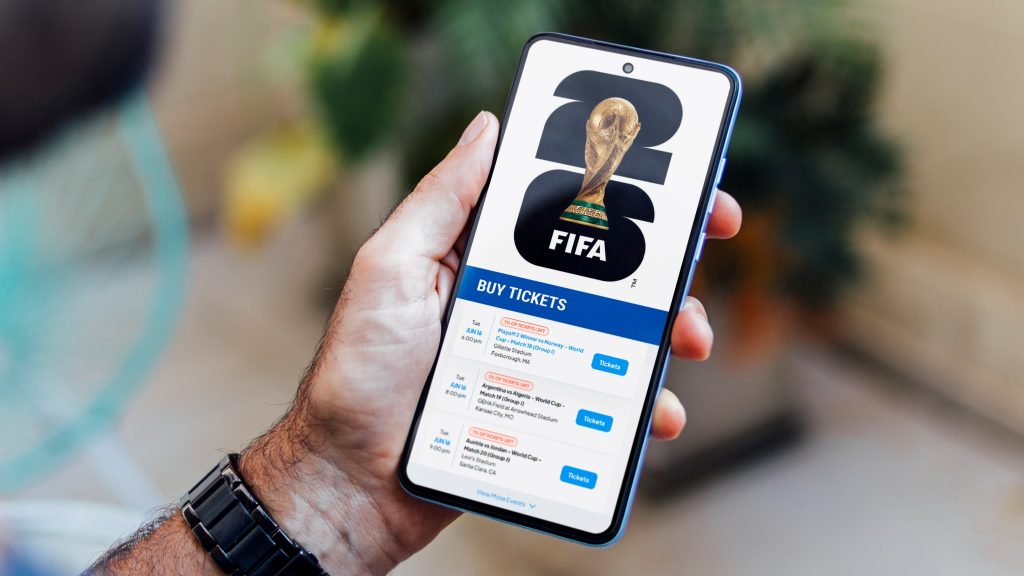
For months, FIFA sold 2026 World Cup tickets in four broad pricing bands, with Category 1 positioned as the top standard tier. Buyers were shown color-coded stadium maps that suggested access to some of the most desirable lower-bowl inventory, even though exact seats were not assigned at the time of purchase. That structure asked people to spend premium money before they knew precisely where they would sit.
When seat assignments began to arrive, the gap between category and placement became harder to ignore. Many Category 1 buyers ended up in corners, behind goals, or farther from the field than the earlier maps appeared to imply. Soon after, FIFA introduced new “Front Category 1” and “Front Category 2” tickets for rows closer to the pitch, often at materially higher prices than standard Category 1. That sequence is what turns a pricing story into a transparency story.
The numbers help explain why the issue matters. Algeria vs. Austria in Kansas City included second-row corner seats listed at $900, roughly double a standard Category 1 ticket. Canada vs. Bosnia and Herzegovina in Toronto featured a “Front Category 1” seat at $3,360, up from $2,240. U.S. vs. Paraguay in Los Angeles showed a “Front Category 1” seat at $4,305, up from $2,730. In more than a dozen matches, “Front Category 1” was priced at exactly double standard Category 1.
FIFA can point to extraordinary demand as context for all of this. In January, the organization said the Random Selection Draw drew more than 500 million ticket requests from fans in all 211 member associations in a 33-day window. That level of demand gave FIFA unusual freedom to segment inventory aggressively, raise prices, and continue refining what counted as a premium product while tickets were still being released.
There is also a second premium channel operating in plain sight. FIFA’s official hospitality program, sold through On Location, advertises premium tickets bundled with food and beverage, entertainment, suites, and other upgraded matchday experiences. That does not by itself prove that ordinary buyers were denied access to specific sections. It does show that FIFA’s ticketing ecosystem was never a simple one-tier market. Standard categories and premium inventory were being sold side by side, with very different levels of clarity about what the buyer would receive.
Where the problem really sits
FIFA’s defense has been that the stadium maps were indicative, not exact. It has described the maps as general guidance and said two people buying the same category could end up in very different areas, from sideline sections to corners or behind the goal. That explanation may address the narrow contractual point. It does not erase the broader issue created by the sales flow itself. If a premium category is marketed with suggestive visual language and then redefined by a later, more expensive front-row tier, the ambiguity acquires commercial value.
Premium sports events are expensive, and FIFA has never pretended otherwise. Earlier this week, in The bigger story behind FIFA’s $11 million World Cup ticket, we looked at the eye-popping Colombia vs. Portugal listing in Miami as a signal of something larger. This latest twist strengthens that same idea. FIFA is not only pushing prices upward, it is continuing to sort access into sharper and more expensive layers.
The North American setting makes the tension sharper. Buyers in the United States and Canada are accustomed to buying a seat, a row, or at minimum a more precise section than FIFA’s category logic offered here. FIFA’s model asked customers to buy a status band instead. Once that status band proved elastic, and once “Front Category” arrived as a clearer badge of proximity, the original Category 1 purchase looked less like a seat promise and more like a placeholder inside a pricing ladder.
None of that requires proving intent that cannot be documented. The stronger and more defensible point is that the process appears to have rewarded imprecision. Buyers paid top-tier standard prices under a broad category system, then watched the same marketplace produce a more tightly defined premium class once assignments had already exposed the looseness of the original one. That is what makes this a meaningful pre-tournament business story. It shows how much revenue can be extracted when the line between category and certainty is left just blurry enough.