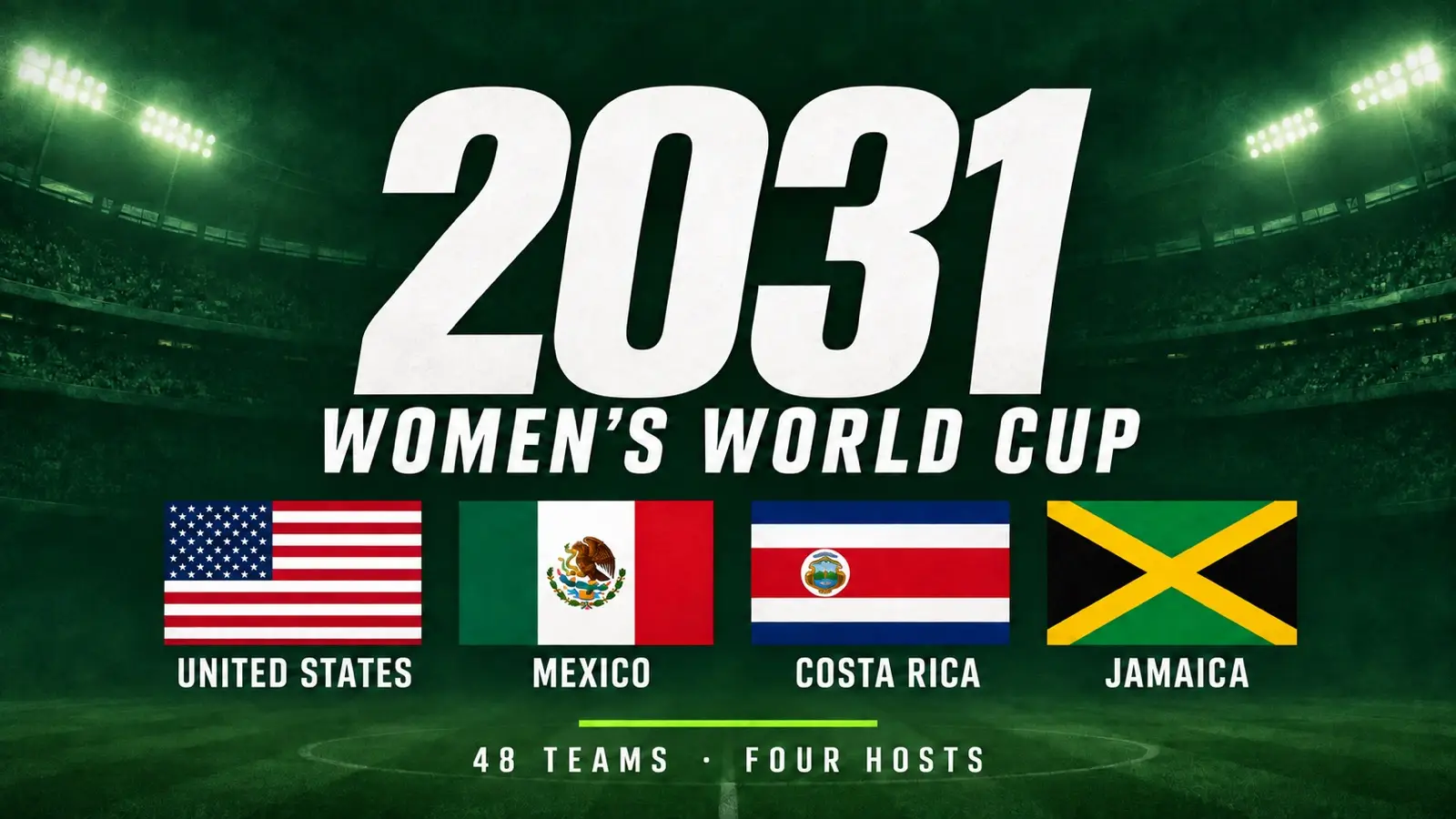
The United States, Mexico, Costa Rica and Jamaica have been awarded the 2031 Women’s World Cup, bringing a field of 48 teams to four host countries for the first time. Two of the new cohosts will be opponents in Texas before the week is out.
View this post on InstagramA post shared by Stadio United (@stadiounited)
Jamaica and Costa Rica meet in Mansfield on Friday, November 27, with a place at the next Women’s World Cup at stake. Their Concacaf W Championship quarterfinal sends the winner directly to Brazil 2027. The loser takes a longer route through a play-in for an intercontinental playoff place.
The 2031 competition will have 12 groups and 104 matches, up from eight groups and 64 games, and last an additional week. Sixteen more teams will qualify. With 40 extra matches to stage, the organizers’ decisions about travel, scheduling and where to distribute games will shape the experience for players and supporters.
The United States returns as host after 1999 and 2003. Mexico, Costa Rica and Jamaica will stage the senior FIFA women’s tournament for the first time. The U.S. and Mexico withdrew their 2027 bid to pursue 2031, seeking more preparation time and lessons from the 2026 men’s World Cup. Costa Rica and Jamaica joined the public launch of the four-country bid in October 2025.
“This is a historic moment for our four countries, but the opportunity is much bigger than any one of us,” U.S. Soccer president Cindy Parlow Cone said. Delivering it will require different work in each country, from recognizing women whose achievements predate FIFA’s competition to making space for girls who haven’t yet joined a team.
What the hosts can build before 2031
Mexico’s history reaches back to 1971, when it hosted a women’s world championship outside FIFA. Guinness records a crowd of 110,000 for the Mexico–Denmark final at the Azteca. Mexico’s FIFA Women’s World Cup debut as a host will come 60 years after that final.
Alicia “Pelé” Vargas, one of those players, has already pressed for attention comparable to the men’s tournament and backing from federation officials and government. In an interview with La Jornada, she also called for more sponsorship and full support for the players.
Costa Rica has a practical example of what hosting can leave behind. It staged the women’s U-17 World Cup in 2014 and the U-20 edition in 2022. A natural-grass pitch at the federation’s Alajuela complex, financed through FIFA Forward and used for training during the latter tournament, was designated exclusively for women’s teams. Access to a pitch after the visitors leave is an investment players can keep using.
Jamaica brings the achievements of the Reggae Girlz, who made their World Cup debut in 2019 as the first Caribbean team to reach the tournament. They became the region’s first side to reach the knockout stage in 2023. The federation’s development plans now extend toward the year it will host.
The JFF’s 2026–31 strategy aims to increase registered players by 50%, license more than 200 female coaches and qualify 120 referees. Carlene Edwards, who chairs its women’s projects committee, told the Jamaica Observer that girls need more competitions to help them progress into senior football. Publishing annual progress would give those ambitions a measure beyond the national team’s results.
For the U.S., the immediate sporting task remains qualifying for Brazil. Emma Hayes takes her team into the El Salvador match in Mansfield on November 27 with Ashley Sanchez back in the USWNT squad. Mexico meets Haiti the following day. Hosting plans are taking shape while the current teams are still fighting for their next World Cup places.
The bid targets more than 4.5 million spectators and over $4 billion in revenue, and proposes a global women’s football development fund. The fund’s eventual size, beneficiaries and rules for distributing money would determine how much of that commercial ambition reaches players outside the tournament itself.
FIFA’s pre-award evaluation also identified unfinished binding agreements, rating the contractual framework high risk and human rights medium risk. It called for an updated independent human-rights assessment. The hosts have secured the event, with substantial delivery decisions still ahead.
Final cities, stadiums, fixtures and ticketing arrangements haven’t been announced. Netflix has confirmed exclusive coverage of the 2027 and 2031 tournaments in the United States and Canada, giving viewers in those markets a broadcaster before traveling fans have a schedule to plan around.
The five-year preparation period gives the federations time to publish the less glamorous numbers: new girls’ teams, funded coaching places and facilities women can use every week. Those commitments could make hosting visible in players’ daily lives well before the opening ceremony.
Get more Stadio United on Google.