Manchester United’s next manager could arrive during the November international break. The harder choice is what kind of football the next coach would ask the team to play. United can’t replace years of recruitment decisions as quickly as it can replace the person on the touchline, even if Michael Carrick’s results force its hand.
United are 17th in the Premier League, with seven points from nine matches, and have gone nine games without a win in all competitions. Their 2-0 defeat at Chelsea also featured Lisandro Martínez’s dismissal, another setback in a Premier League weekend shaped by sharply contrasting fortunes. Roma arrive on November 3, with Aston Villa following on November 8. The international break after those matches is reportedly the point at which United’s leadership will reconsider Carrick’s future.
Only in May, the same leadership awarded him a contract running to 2028. United’s announcement highlighted 11 wins in his first 16 league games, a return to the Champions League and the division’s highest points tally during his period in charge. Those results were real. So is the collapse that followed, and the discrepancy has forced a much harder examination of what Carrick was building.
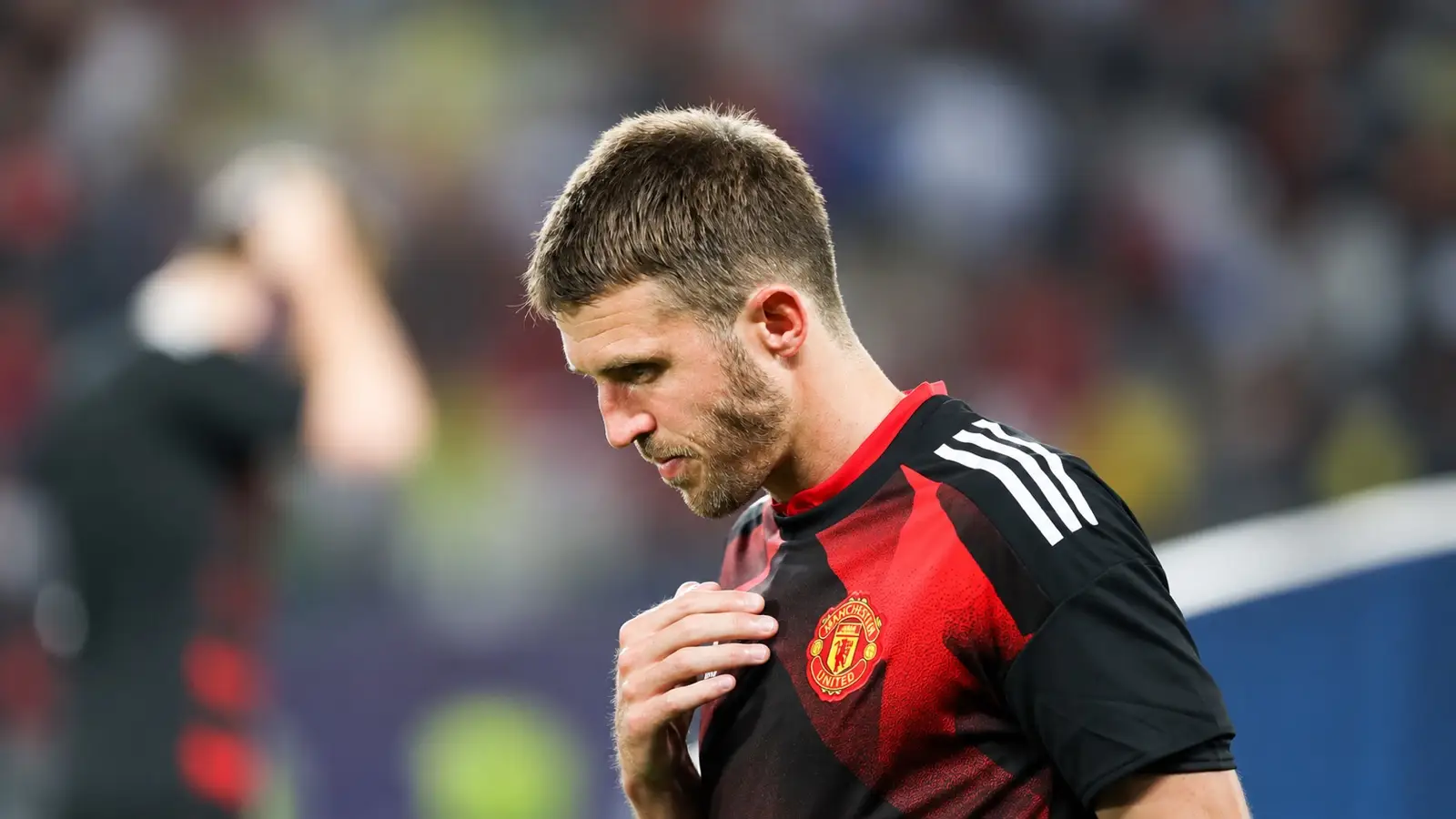
Michael Carrick is back 🤝
— Manchester United (@ManUtd) January 13, 2026
Our former captain is our Head Coach for the remainder of 2025/26 🔴
The candidates behind Carrick’s uncertain future
Eddie Howe and Julian Nagelsmann have emerged as leading reported alternatives. Howe’s Premier League experience appeals to director of football Jason Wilcox, according to reporting on United’s succession plans. Recruitment director Christopher Vivell has worked with Nagelsmann before and is understood to rate him highly. Neither has been appointed, and Carrick remains in charge.
View this post on Instagram
Ole Gunnar Solskjær’s recent interview points back to January rather than forward to a new appointment. In a Norwegian television interview, United’s former manager acknowledged that he would’ve considered returning temporarily when Ruben Amorim departed in January. He still feels there’s work he didn’t finish at Old Trafford. But he also backed Carrick and described his January contact with the club as a conversation, not negotiations. Treating all three external names as equally active candidates would distort the current situation.
For United’s executives, choosing Manchester United’s next manager means more than finding someone with different ideas. Howe and Nagelsmann plainly have those. The challenge is identifying which ideas would improve the team without requiring yet another complete change in the kind of players United need.
Why Carrick’s Manchester United have stalled
Carrick’s spring success relied on a side that was dangerous when games opened up. This season, United have had to spend more time controlling possession. An Opta analysis before the Chelsea defeat put their average league possession at roughly 56%, compared with 49% during Carrick’s previous spell. It also found that the quality of their shots was among the lowest in the Premier League, despite a high volume of attempts.
Those figures point to a specific dilemma. Keeping the ball isn’t the same as moving opponents into positions where chances become easier to finish. A team can circulate possession for long periods and still struggle to find a central runner, create an overload or deliver a pass into the penalty area before defenders recover. Carrick has to solve those problems while preventing opponents from exploiting the space United leave behind when attacks break down.
Morgan Rogers said: 'I got this.'
— Premier League (@premierleague) October 31, 2026
What a run. What a finish. @ChelseaFC lead. pic.twitter.com/KK7bR3YstM
Roma and Villa will test the response
Roma’s visit provides a practical measure of that balance. The Italian side have scored freely in recent matches and arrive in considerably better form, while United have conceded costly opportunities in transition. Carrick doesn’t need to demonstrate that United can dominate every minute. He needs his players to attack with enough purpose that the defensive risks are justified.
The personnel complicate the assignment. Benjamin Šeško and Manuel Ugarte are unavailable, according to United’s pre-match team news. Patrick Dorgu is back training but won’t face Roma. Martínez can play in Europe, but his Chelsea red card rules him out of Sunday’s league game against Aston Villa. Two matches in five days will therefore test different versions of Carrick’s defense and midfield.
Carrick hasn’t publicly abandoned the players. In Monday’s press conference, he defended Martínez’s commitment, said the dressing room remained together and acknowledged the need to make better decisions on the field. Kobbie Mainoo, speaking alongside him, said the players must support the manager through their performances. Those statements don’t prove a recovery is under way, but they make it difficult to describe the current situation simply as a manager who’s lost his dressing room. Ahead of the earlier Bournemouth match, United had also shared Carrick’s comments on the challenge facing his team.
Michael Carrick spoke to us ahead of Sunday's match against Bournemouth 💬
— Manchester United (@ManUtd) October 24, 2026
What Manchester United’s next manager would change
Howe would approach that problem with a history of building coordinated, demanding Premier League teams. He inherited a Newcastle side facing relegation danger in 2021, guided it to two Champions League qualifications and won the 2025 League Cup. He left in July after a disappointing 12th-place finish, which belongs in any balanced assessment of his record.
A Howe appointment would raise immediate questions about United’s willingness to press collectively. The forward line can chase the ball, but unless the midfield and defense move behind it, pressure becomes a collection of individual efforts rather than an effective team tactic. Howe has shown he can teach organization across a squad. Whether United’s current personnel can sustain his preferred intensity is a separate judgment.
Nagelsmann offers a different route. His work at Hoffenheim, RB Leipzig and Bayern Munich established his reputation for adapting formations and using positional movements to alter how teams attack. After leaving Germany’s national team following the 2026 World Cup, he became a potential option for clubs seeking a coach with both elite-level experience and a distinctive tactical approach.
United would’ve to decide whether they’re prepared for the work such a change involves. Tactical flexibility sounds attractive in a squad assembled under multiple managers, but it depends on players recognizing new responsibilities quickly. A team struggling with spacing won’t become organized simply because its formation can change during a match. Howe offers a known Premier League management record; Nagelsmann might offer a broader tactical redesign. Neither is an instant repair.
The recruitment test for United’s next manager
The board must also confront the recruitment consequences of choosing Manchester United’s next manager. Under Amorim, United pursued Patrick Dorgu as a left-sided option, reflecting the demands of his system. A fullback asked to become a wing-back, a midfielder expected to cover open ground and a forward who thrives attacking space all require different support from their teammates. United risk another expensive transition if they choose a coach without agreeing on the player profiles needed to make his football work.
Solskjær’s unfinished business is a different story
Solskjær’s interview is illuminating here, even though it shouldn’t be treated as evidence of a new approach for Carrick’s job. He returned as caretaker in 2018, secured the permanent position, led United to third and second in successive league seasons and reached the 2021 Europa League final. His teams produced memorable results but eventually encountered tactical and defensive problems that contributed to his dismissal. A familiar figure can change the mood quickly; sustaining results is a more demanding test.
The Norwegian was unusually careful about the distinction himself. He described a willingness to help United for the remainder of the season in January, not a request for a new long-term contract. He spoke warmly about Carrick, with whom he worked closely, and regarded him as capable of taking the club forward. His sense of unfinished business is an interesting personal admission, not a confirmed campaign for the vacancy.
Carrick’s immediate test
The debate over Manchester United’s next manager leaves Carrick with the immediate task: a response on the pitch. He knows the squad and has already overseen a sharp improvement once. He also has to account for why the football has become less effective when the schedule, opponents and demands changed. His previous record supports an argument for patience, but can’t exempt him from his current results.
The two fixtures ahead aren’t identical tests. Roma offer a chance to recover European momentum against an opponent capable of punishing United’s defensive uncertainty. Villa present a domestic contest with direct consequences for a team just above the relegation zone. The club can assess more than the scores: the spacing between United’s lines, the movement around its central attackers, the response to setbacks and the consistency of decision-making.
For Carrick, the most useful response would be a performance that makes United’s decisions easier to understand: attacks that end in better chances, midfielders close enough to recover possession, and a defense that isn’t left exposed whenever the ball is lost. The scores against Roma and Villa will determine the public pressure. The patterns on the pitch should help determine his employers’ judgment.
Carrick must show that his team can create better chances without conceding better ones. If United choose a successor instead, their task can’t stop at a name on a contract. They’ll need to decide which players, positions and amount of development time that coach’s football requires. After so many changes of direction, those choices must point the same way for Manchester United’s next manager to succeed.