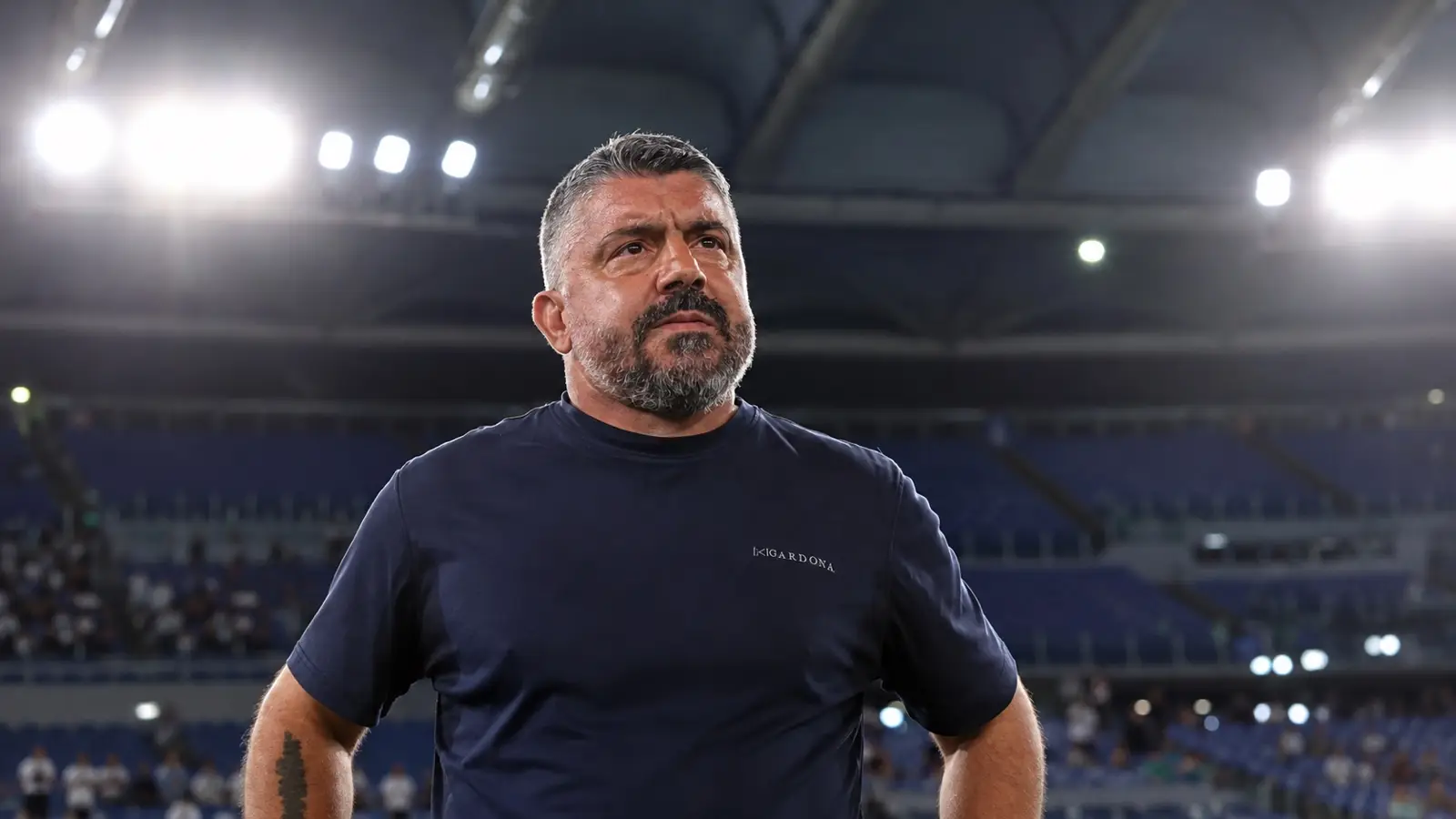
After Tijjani Noslin scored twice against Sassuolo, Gennaro Gattuso praised the intensity of his pressing. “One thing I go crazy for is when he presses, with such intensity and strength,” the Lazio coach said afterward. Six goals had brought another victory. His center forward’s willingness to start the defending was part of the explanation.
For a coach returning to club football after Italy’s failure to qualify for the World Cup, Lazio’s early surge has offered a swift change of scene. The 6–2 victory at Sassuolo took them to 25 points from their first nine Serie A matches, the best start in the club’s history. Eight wins, one draw and five consecutive victories have given Gattuso a place in the title conversation.
Lazio haven’t won the league since Sven-Göran Eriksson’s team claimed the Scudetto in 2000. Twenty-six years later, they’ve scored 22 goals and conceded seven through nine games. A club that missed European qualification last season has put itself among the early challengers.
Gattuso’s first competitive match at Lazio had ended with a 2–0 home defeat to Mantova in the Coppa Italia. After the Sassuolo win, he recalled how the players had continued believing in the work despite that early setback. The results since have come with an increasingly recognizable set of movements, and with several players finding useful roles in the same team.
The clearest attacking relationship is on the left. Nuno Tavares advances from fullback, Mattia Zaccagni moves inward from the wing, and Kenneth Taylor supplies the supporting pass. Following Tavares can open space for Zaccagni; staying inside can free the overlapping fullback. Taylor keeps the combination connected.
Gattuso highlighted those wide combinations after Sassuolo. The coordination lets Lazio attack with speed because the supporting movement is already underway when the pass arrives. On the opposite side, Romano Floriani Mussolini scored his first Serie A goal in that win. The great-grandson of Italian fascist dictator Benito Mussolini credited Gattuso with giving the fullbacks freedom to attack. Those runs make Lazio’s nominal 4-3-3 harder to contain, forcing defenders to account for players arriving from deeper positions.
Davide Frattesi is especially valuable in that respect. His runs from midfield add another target around the penalty area, while Taylor contributes to both the buildup and the recovery of possession. Behind them, Reda Belahyane keeps the ball moving and supplies cover for the defenders. His emergence has helped Lazio cope with Nicolò Rovella’s absence.
Lazio also choose their moments to press. After six league games, they ranked ninth in Serie A for average team position but fourth for tackles won in the middle third. They could allow an opponent to advance, apply pressure in midfield and attack from the recovery. Noslin’s intensity gives them a way to begin that defensive work farther forward when the opportunity is there.
Their 3–0 victory at Juventus showed how those different threats can combine. Oliver Provstgaard headed in a Zaccagni delivery. Tavares found Gustav Isaksen on the opposite flank for the second, and Fisayo Dele-Bashiru added the third with a run from midfield. A defender, a winger and a midfielder finished the moves. Juventus had to contend with more than one point of attack.
Twelve players have now contributed to Lazio’s league goals. Noslin leads with four, followed by Frattesi and Isaksen on three each. That spread gives Gattuso options and opponents several players to track. It also reduces the burden on a single finisher, even if the scoring rate is unlikely to remain this generous every week.
Gattuso says he’s changed, too. After the Juventus win, he described a close group and said he’d become less concerned with players’ phones and habits while remaining firm about his football demands. Provstgaard credited him with helping players improve and spoke positively about the atmosphere at the training ground. Confidence has a practical use when players are being asked to leave their positions and trust a teammate to cover.
The fixture list still calls for perspective. Seven of Lazio’s first nine opponents were 13th or lower in the table after the Sassuolo match. The win at Juventus and draw with Milan give the run substance against stronger opposition, but Inter, Roma and Como have yet to test it. Lazio have taken almost every available point from a favorable opening stretch. The comparisons with their closest challengers are still to come.
There are football reasons to expect tighter margins, too. The league’s assessment of Lazio’s opening six games highlighted strong finishing and important saves from Christos Mandas, particularly at Venezia. Those contributions can turn a balanced match into three points. Lazio will need to keep creating chances when their finishing becomes less efficient.
Milan have already exposed one problem. Lazio led 2–0 before conceding twice in the second half and drawing. At Sassuolo, they were 3–1 ahead before Kristian Thorstvedt’s dismissal, but playing against ten men for roughly an hour helped the match become a rout. The six goals sit alongside evidence that managing a game through its difficult periods remains a task for Gattuso.
The movement that makes Lazio dangerous also creates responsibilities. When they crowd the side with the ball, a quick switch can expose the opposite flank. When a defender steps forward to challenge, someone has to cover behind him. Better opponents will test the timing of those adjustments, particularly once the first pressure has been beaten.
The schedule gives Gattuso room to work. Lazio have no European football this season, and their early cup exit leaves the league as their competitive focus. That means more opportunities to train and recover between matches than rivals balancing several competitions. A squad learning a new coach’s movements can make good use of that time.
Napoli away in November, the December derby against Donyell Malen’s Roma and January meetings with Inter and Como will sharpen the title assessment. Averaging two points per game across the remaining 29 matches would still take Lazio to 83. Their next task is to keep finding the extra runner when opponents know where to look for him.