Yaya Touré needed little more than two months in his first senior head-coaching job to return to the Champions League, this time from the technical area. Slovan Bratislava’s 2-1 extra-time victory at Celje completed a 3-2 playoff win and placed the Slovak champions in the 2026 Champions League draw. The feat makes him the first former international for an African nation to guide a club into the competition’s main phase as head coach.
Slovan went ahead in the 18th minute when Andraž Šporar chipped the goalkeeper, before Svit Sešlar converted a penalty 16 minutes later. The tie stayed level until the 100th minute, when Nino Marcelli carried the ball forward from halfway and Cristian Martínez clipped in the finish that sent the Slovak champions through.
The result completed an unbeaten six-match qualifying run. Slovan defeated Iberia Tbilisi 3-1 on aggregate, beat Mjällby 4-1 across two legs and edged Celje 3-2. Four wins and two draws took the club into its second Champions League league phase after its 2024/25 appearance.
Touré was appointed on June 13 and signed a three-year contract. At 43, he arrived for his first senior head-coaching role after working in Tottenham’s academy and serving as an assistant with Saudi Arabia under Roberto Mancini. Slovan hired one of his generation’s most recognizable midfielders, but qualification required him to establish authority in a different role.
The historical description requires precision. Touré isn’t the first manager born in Africa to coach in the Champions League. Mali-born Jean Tigana led Monaco to the 1997/98 semifinals after representing France, while São Tomé-born Nuno Espírito Santo coached Porto in the 2016/17 competition. Touré’s distinction is that he is the first former international for an African national team to take a club into the Champions League proper as its head coach.
From Champions League winner to Champions League coach
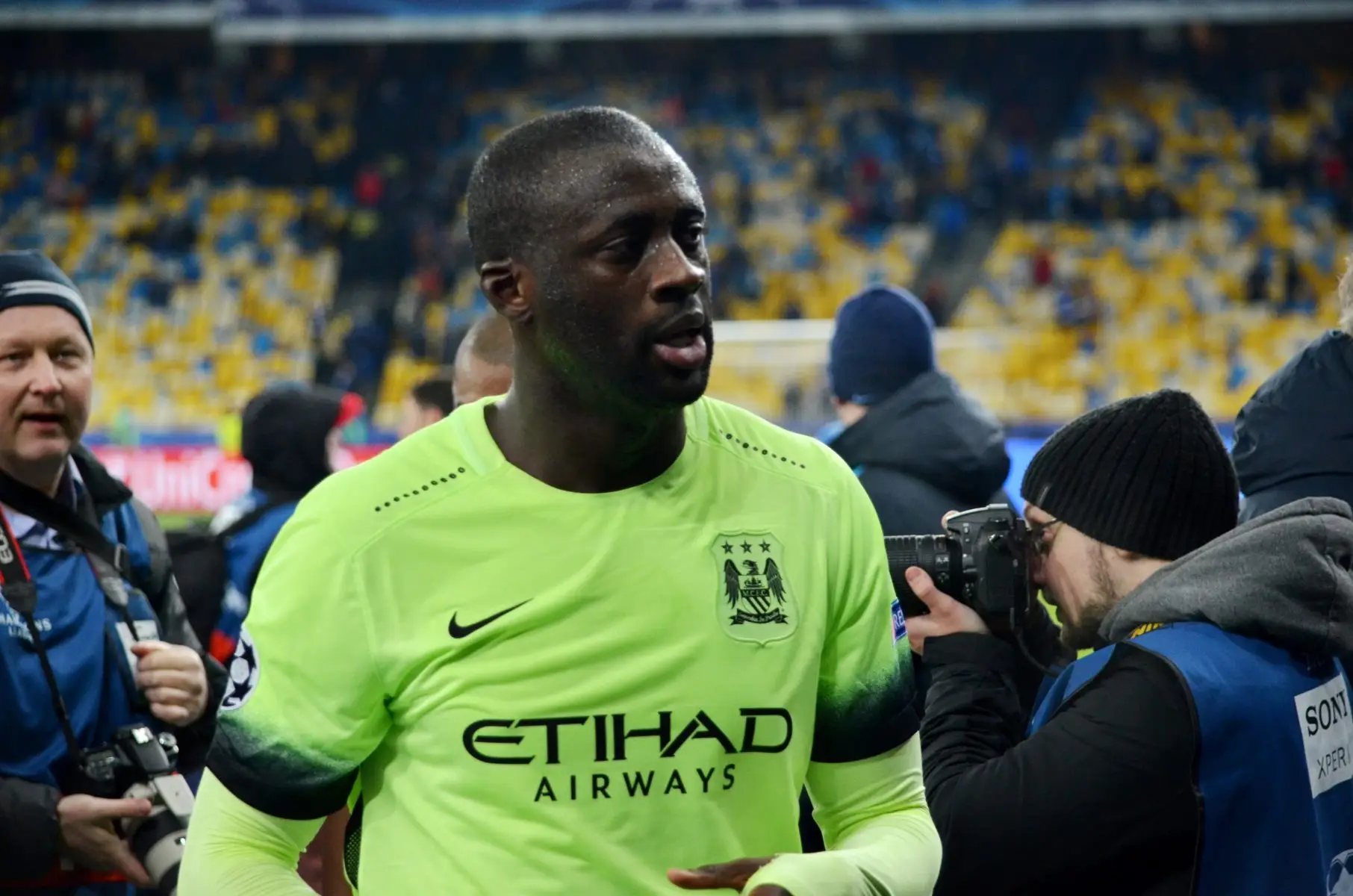
Touré’s return carries weight because the competition was already one of his defining arenas. UEFA records 70 Champions League appearances, the seventh-most among African players, and he won the trophy with Barcelona in 2009. He later became one of the Premier League’s defining trailblazers at Manchester City and captained Ivory Coast to the 2015 Africa Cup of Nations title after winning four consecutive African Player of the Year awards.
His first months at Slovan don’t establish a complete coaching identity, but they show the scale of the transition. Touré moved from academy and assistant work into a job where every qualifying round carried immediate sporting consequences. His team cleared all three without losing, including decisive away wins in Georgia, Sweden and Slovenia.
Slovan now has home games against Inter, Real Betis, Shakhtar Donetsk and Stuttgart, plus trips to Paris Saint-Germain, Roma, Lille and LASK. LASK’s own dramatic qualification gives the schedule another outsider story, while Inter and Paris Saint-Germain provide two of the league phase’s most demanding assignments.
Slovan will be an outsider, and Touré’s playing résumé won’t decide a single match. Qualification has still altered the historical record. A competition filled for decades with African stars will now feature a former African international as a head coach in its main phase. The Champions League once measured Touré by the ground he covered in midfield. It will now measure the decisions he makes from the technical area.