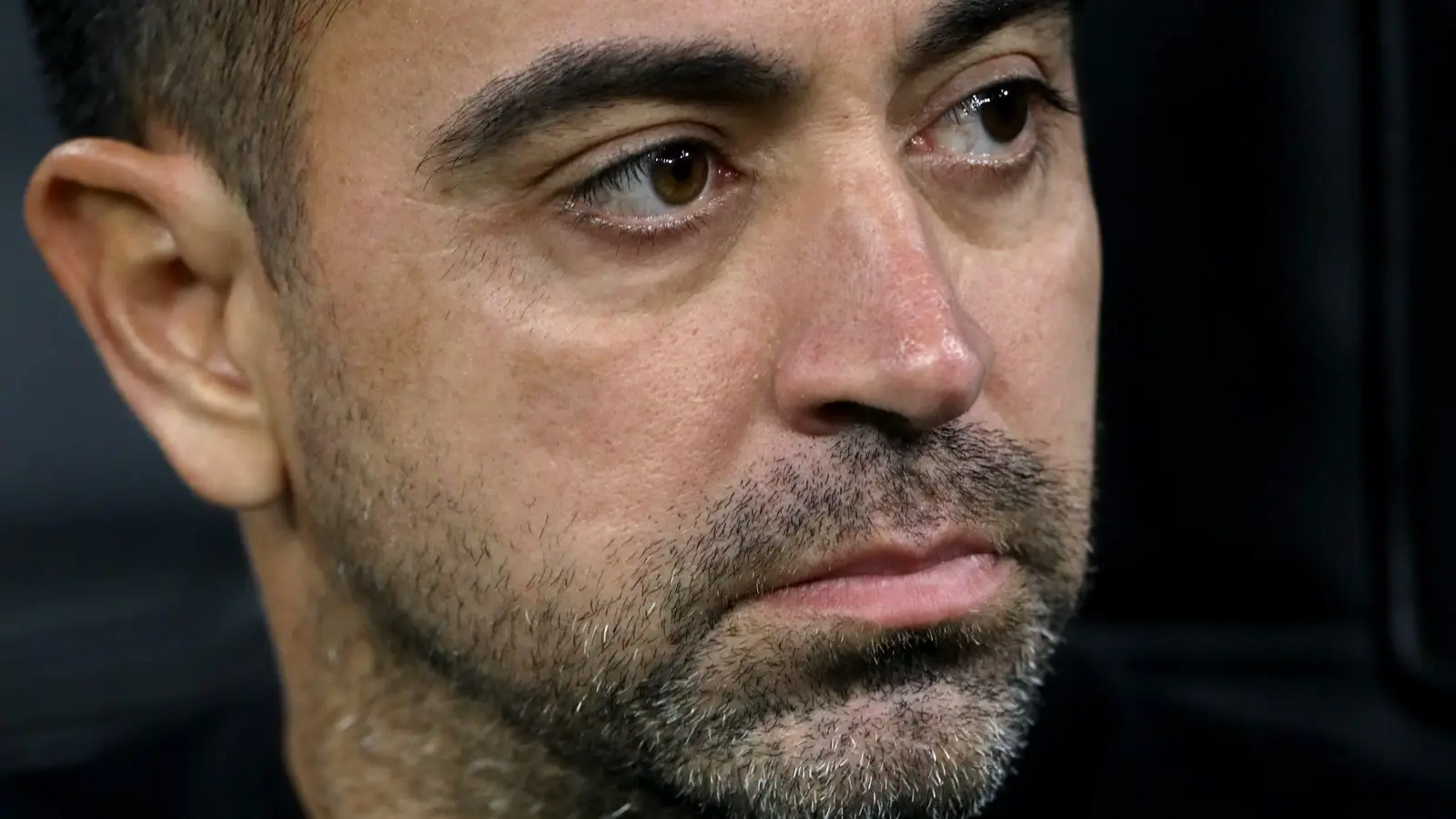
The Netherlands has chosen Xavi Hernández to lead its men’s national team. His agreement runs through the 2030 FIFA World Cup. The job puts the former Barcelona coach on Europe’s coaching map as several elite club managers move into international soccer. It’s Xavi’s first national-team coaching role. He is scheduled to open against Germany in the Nations League at Johan Cruijff ArenA on Sept. 24.
He succeeds Ronald Koeman. Koeman chose not to renew his expiring contract after the Netherlands left the World Cup in the round of 32. Xavi is the first overseas-born head coach of the Dutch men’s team since Austrian Ernst Happel’s 1977–78 tenure. His nationality breaks a long pattern; his football education is deeply entangled with Dutch coaches and ideas. In the KNVB’s official English rendering, Xavi said: “You could say I am, in a way, a son of Dutch football.”
Four Dutch influences, not one lineage
Taken as a single line of descent, that phrase flattens four different relationships. Xavi connected his development inside Barcelona’s La Masia academy to strong influences from Rinus Michels and Johan Cruyff. He placed Louis van Gaal and Frank Rijkaard in a separate category. Those coaches shaped his playing and later coaching outlook.
Michels coached Barcelona twice, with both spells ending before Xavi was born. Cruyff arrived at the club as a Michels player in 1973. He later coached its first team from 1988 to 1996. Xavi entered the U12 setup during that period but didn’t reach the senior side until 1998. He developed in a youth environment Cruyff had helped reorganize. Years later, Cruyff personally encouraged him toward coaching. Neither man coached Xavi in Barcelona’s first team.
Van Gaal and Rijkaard belong to a different category. Van Gaal trusted Xavi with a senior-squad place and gave him his official competitive debut in August 1998. Rijkaard coached him from 2003 to 2008. During that spell, Xavi became central to a team that won consecutive Spanish titles and the Champions League. Their influence came through direct work with the player, though their methods shouldn’t be folded into a single Cruyffian system.
What returns through Xavi
The KNVB’s case for Xavi rests on present fit rather than a historical family tree. Technical director Nigel de Jong wants a team that controls matches, takes initiative and plays attractively. He also wants the flexibility that the highest level demands. De Jong cited Xavi’s rapport with players and group leadership. The federation is still assembling his staff and plans to include Dutch input. Unlike Germany’s wider DFB rebuild, the KNVB has not presented Xavi’s hiring as an overhaul of its youth teams and development system.
Xavi’s coaching record supplies evidence of adaptation rather than imitation. He won seven trophies across 102 games with Al Sadd. He then led Barcelona to La Liga and the Spanish Super Cup in 2022/23. He had held no head-coaching job since leaving Barcelona in May 2024. Xavi has also credited Pep Guardiola, Luis Aragonés and other non-Dutch coaches. His career has taken him through Spain and Qatar. A Dutch-only origin story would misrepresent the education he now brings to Oranje.
The Nations League places the Netherlands with Germany, Serbia and Greece. Xavi’s incomplete staff will have little time to establish shared habits before the opener. The federation selected him for a set of principles, but the appointment can’t guarantee their expression on the field. Against Germany, the first evidence will come through the team’s spacing, decisions in possession and reaction after losing the ball. The family metaphor explains the fit; the match will begin to show which ideas survived the journey.