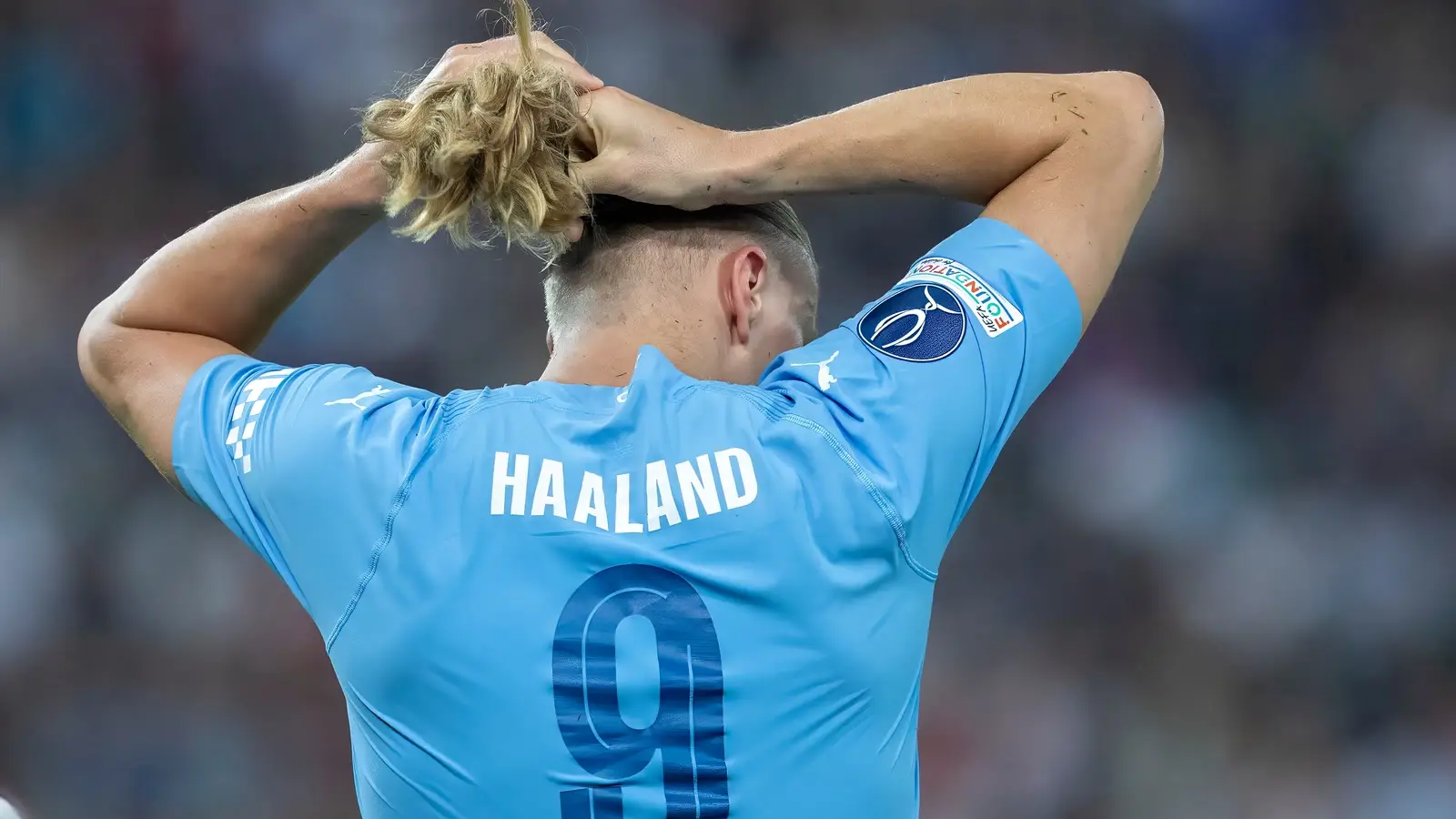
A truck stopped in northern Ecuador contained 370 cocaine packages in a concealed compartment. Hundreds bore the word “HAALAND.” No authority alleges that Haaland knew about the labels, approved them or had any connection to the shipment or detained driver. Officials have reported no authorization for the label use. His football identity beyond Manchester City is widely recognizable.
Prosecutors said investigators found the rectangular packages inside a modified double bottom in the truck’s platform in Guagua Negro, on Tulcán’s southern edge in Carchi province. Of the 370 packages, 339 carried “HAALAND” and 31 carried “MESSI.” Official images show green plastic wrapping with attached black labels. AP identified the portrait-style footballer as Haaland; the labels also show his surname in white capitals, a ball and a trophy graphic. The labels sat on the wrapping, not in the cocaine.
However, authorities haven’t reconciled the weight. Police’s preliminary account reported 370 kilograms of cocaine. Ecuador’s prosecutor’s office later said laboratory tests identified 469.6 kilograms, almost 100 kilograms more. The authorities haven’t explained the difference.
The dates also conflict. Prosecutors place the interception in the early hours of August 10; a police account instead dates the operation to August 11. Officers detained one woman who was driving. Prosecutors then filed charges for alleged large-scale trafficking in controlled substances. A judge ordered pretrial detention and a 30-day investigation. She hasn’t been convicted, and no authority confirms a second arrest.
Haaland imagery inside an illicit labeling system
For context, logos on drug packages can serve internal identification functions. In a 2024 sworn affidavit from a separate U.S. case, a Homeland Security Investigations task-force officer wrote that cocaine bricks often carry supplier logos. Thierry Rostan, then the United Nations drug agency’s representative in Bolivia, separately described recurring package marks as identifiers for groups, laboratories or factories. However, neither account establishes what the football labels meant in Ecuador.
Still, the current case offers no answer for why someone chose the names or who printed the labels. Authorities haven’t assigned a meaning to either name. The presence of 31 Messi packages in the same compartment does settle one narrower point: this wasn’t a shipment in which all 370 packages carried Haaland’s name.
Football supplies a vast pool of recognizable identities. Yet visibility cannot establish intent. Haaland’s 2026 World Cup run expanded his audience beyond club football, but nothing in the Ecuadorian case links that visibility to the choice of label. These labels apparently appropriated his identity for an illicit packaging system. That doesn’t make Haaland a participant.
Likewise, authorities haven’t stated where the truck originated, where someone loaded its cargo or where it was headed. Proximity to Colombia, the driver’s reported nationality and police estimates for hypothetical foreign markets don’t establish a route. No agency has identified a criminal organization behind the packages.
For now, the labels remain physical evidence attached to seized packages until investigators identify who made them and what they denoted. The label is evidence in an Ecuadorian drug case, not evidence about Erling Haaland.