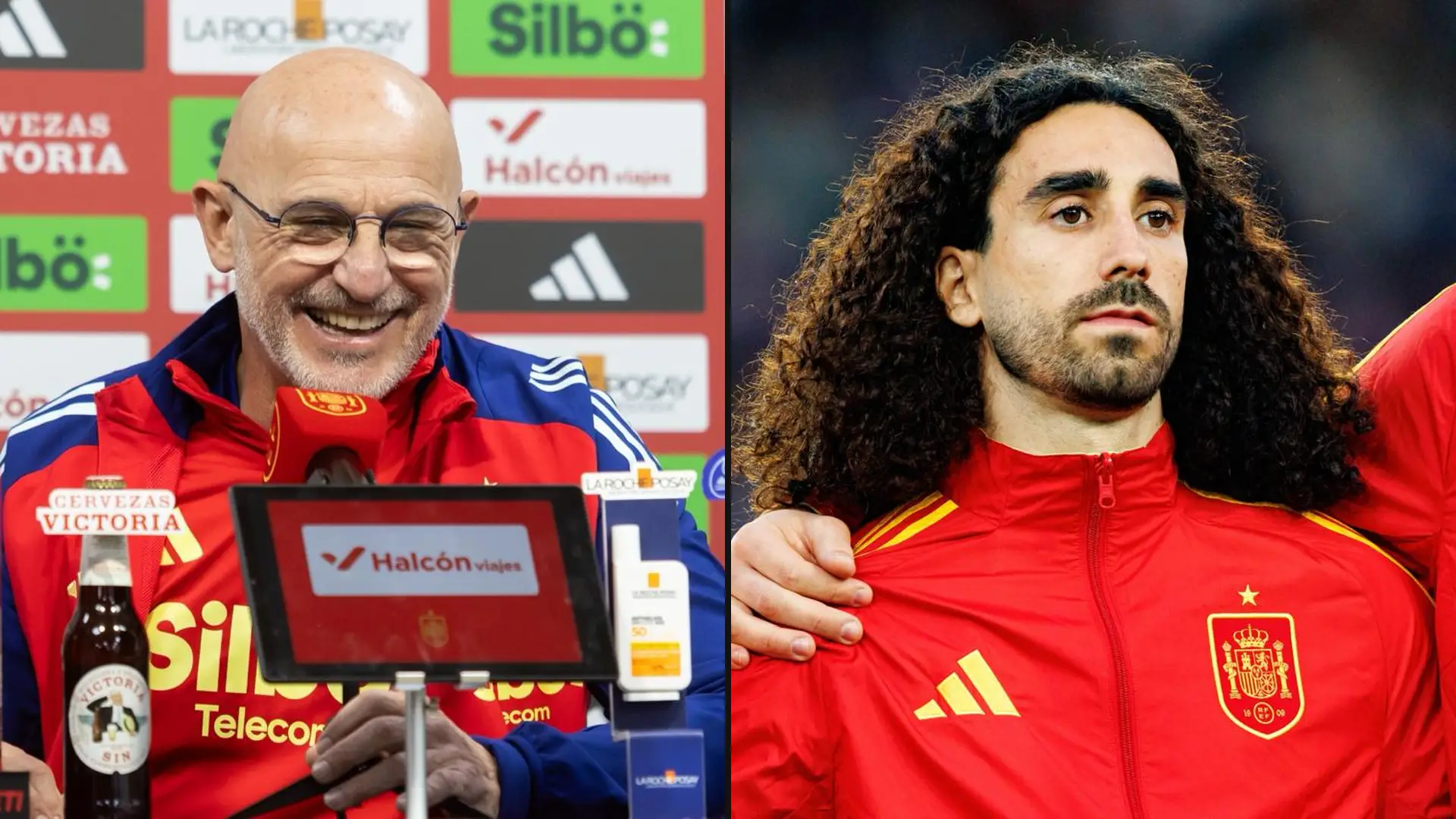
Marc Cucurella made the promise before Spain had played its first match of the 2026 World Cup. If the team won the tournament, he would have coach Luis de la Fuente’s face tattooed on his body. It was an unusually permanent wager with seven weeks of football still ahead.
Spain’s World Cup final win completed the difficult part. Spain defeated Argentina 1–0 after extra time on July 19, with Ferran Torres scoring in the 106th minute. Cucurella’s pledge had survived the entire tournament.
After the final, Cucurella was already considering where the portrait should go. “People will ask me about it too, so it has to be somewhere visible,” he said.
De la Fuente responded with a joke of his own. “I’m not so terribly ugly that they need to put it somewhere where nobody can see it,” the Spain coach said. The remark gave Cucurella little room to retreat from a promise he had made before the tournament began.
Nine days after the final, Cucurella revealed the finished work. Created by Spanish tattoo artist Ganga, the portrait shows De la Fuente holding the World Cup trophy. Cucurella presented it with a concise caption: “Promesa cumplida,” or “Promise fulfilled.”
A promise with a longer history
The tattoo appears on Cucurella’s left arm. Reports have described the location more narrowly as his upper arm or forearm, but the broader description is the one consistently supported by the available material.
De la Fuente’s place on Cucurella’s arm carries more history than the World Cup alone. The coach selected him for Spain’s under-21 team and later took him to the Tokyo Olympics in 2021. Cucurella started the gold-medal match as Spain finished with silver.
Their shared path therefore reaches across three levels of Spanish football. De la Fuente coached Cucurella as a developing international, selected him for an Olympic final and, five years later, guided the senior team to the World Cup.
The tattoo was revealed eight days after Madrid’s World Cup homecoming, when Spain carried its second men’s title through the capital. The official celebrations had ended, but Cucurella still had one piece of unfinished business.
He had established a less permanent version of the ritual after Euro 2024. Having promised to dye his hair red if Spain won, he followed through after the final. The World Cup agreement raised the stakes considerably. Hair grows out. A portrait of the national-team coach holding the trophy does not.
Forty-seven days separated the original interview from the finished tattoo. Between them came eight matches, an extra-time final and Spain’s second men’s World Cup title. Cucurella had made the pledge before knowing how the tournament would unfold. Once Spain won, he made sure the evidence would remain visible.