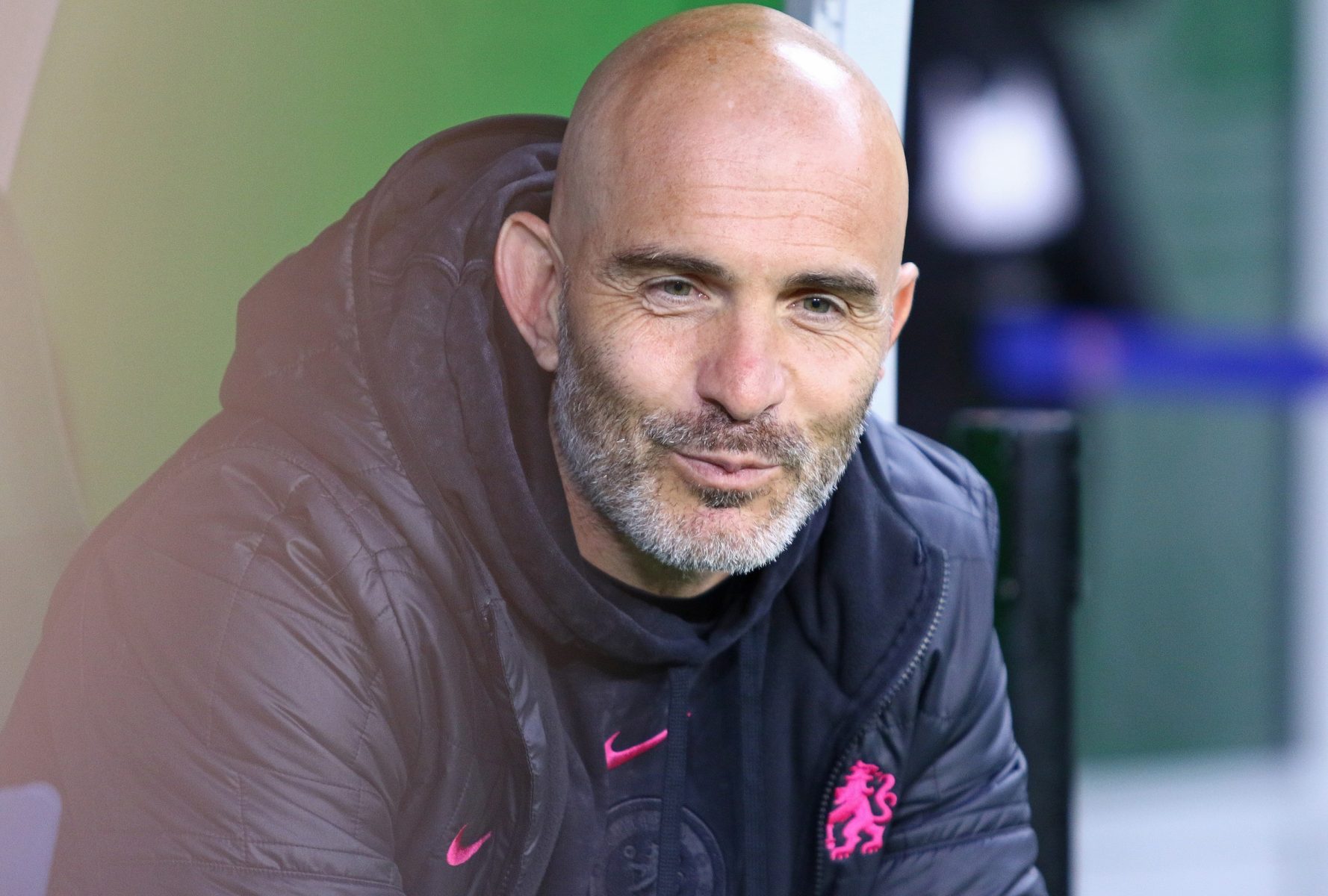
Enzo Maresca is back at Manchester City, this time with the manager’s office rather than a development squad or assistant’s role. City confirmed Monday that the 46-year-old Italian has agreed to a deal through summer 2029, making him the first manager after Pep Guardiola’s Manchester City reign.
The appointment turns succession planning into an actual handover. Guardiola leaves after 10 years, 20 major trophies, six Premier League titles and the club’s first Champions League. City have not chosen a break from the Guardiola structure. They have chosen someone who has already worked within it.
Maresca’s pathway to the Etihad gives the move its logic. He led City’s Elite Development Squad in 2020/21, returned to Guardiola’s staff for the 2022/23 Treble season, then built a senior résumé away from Manchester. Leicester won the Championship under him at the first attempt. Chelsea won the UEFA Conference League and FIFA Club World Cup during his time at Stamford Bridge.
City’s public pitch is continuity without cloning. Maresca is not being asked to reproduce Guardiola’s voice. The job is to preserve the club’s football principles while deciding where they need new emphasis. His teams have tended to seek control through possession, narrow full-backs, central overloads and attacking shapes that can become a 3-2-5. That makes the transition less of a tactical relocation and more of an internal handover.
The Chelsea settlement follows him back
City have acknowledged that confidential conversations with Maresca took place in autumn and winter 2025 while he was Chelsea head coach, involving the possibility of a return to Manchester in a transitional coaching capacity if Guardiola left. City also acknowledged Chelsea’s position and said the clubs reached a mutually agreed settlement.
The value of that settlement was not disclosed by City or Chelsea. Guardian reporting put City’s compensation to Chelsea at roughly $22.5 million. Maresca also reached a personal settlement with Chelsea, according to the same report.
City’s attraction to Maresca sits in years of observation. He developed academy players in Manchester, worked inside the Treble staff, proved he could carry a possession-heavy idea through a promotion race, then handled the scale of Chelsea. The résumé is not as long as Guardiola’s was when he reached City. No successor’s could be. It is built from proximity, not imitation.
Maresca’s own first words as City manager centered on pressure rather than inheritance. “I want us to win, play good football and enjoy the pressure of representing Manchester City.” The line is simple, but it identifies the narrow corridor he now enters. City are trying to make the most consequential managerial change of their modern era feel planned, not improvised.
The first phase will come quickly. His opening City match is scheduled for Aug. 1 against Internazionale in South Korea, followed by the Community Shield against Arsenal on Aug. 16 and the league opener against Bournemouth. Those fixtures will not define the post-Guardiola years. They will begin them.
Maresca inherits a structure designed to outlast any single manager. Guardiola’s new global ambassador role with City Football Group makes that continuity explicit. The harder task belongs to the coach on the touchline: keeping enough of City’s old logic to avoid a rupture, and changing enough of it to make the team his own.