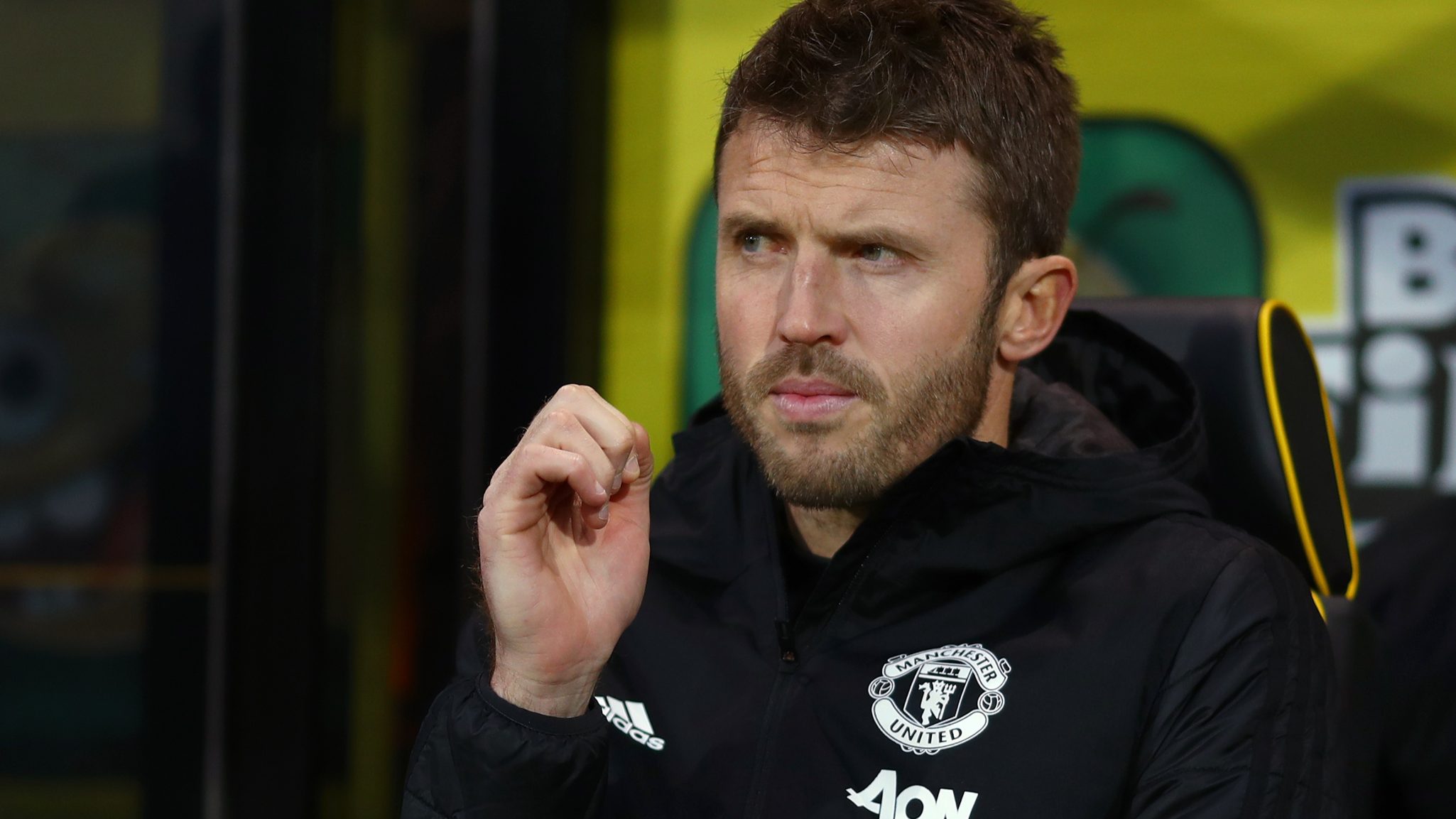
Michael Carrick’s case for the Manchester United job no longer lives in the abstract. It is sitting in the table, in the fixture list, and in the Champions League place United confirmed with Sunday’s 3-2 win over Liverpool. For a club that has spent too many recent seasons trying to explain itself, Carrick has offered something simpler. Results.
He was hired in January as an interim solution, but interim jobs have a way of changing shape when the team starts behaving differently. United’s 32-point haul from 14 Premier League matches under Carrick is five ahead of Arsenal’s total over the same period. It’s not proof of a finished project. It is proof that the project has stopped drifting.
The Liverpool match gave the argument a fitting edge. Matheus Cunha scored early. Benjamin Šeško doubled the lead before the first quarter of an hour had passed. Liverpool forced their way back through Dominik Szoboszlai and Cody Gakpo, helped by United errors, before Kobbie Mainoo supplied the 77th-minute goal that changed the meaning of the afternoon.
Mainoo is central to the Carrick discussion because his own season tracks the team’s.
Marginalized earlier in the campaign, he has become one of the clearest symbols of the reset. He signed a new five-year deal last week, then scored the goal that secured United’s return to Europe’s top competition. Under Carrick, he has started 13 of 14 league matches, missing one through injury. That is not a sentimental detail. It is a selection pattern.
The tactical picture is still developing, but it has logic. Against Liverpool, United played from a 4-2-3-1 shape, with Mainoo and Casemiro helping connect the back line to midfield. The right side became a route forward, with Diogo Dalot, Bruno Fernandes, Bryan Mbeumo, and Šeško all part of the passing and running lanes that gave Liverpool problems. United had only 36 percent possession, yet produced 3.14 expected goals to Liverpool’s 1.1. Carrick has not built a possession machine. He has built a team with rules.
The Champions League test
The next question is whether those rules can survive a full season. If Carrick is given the permanent job, the aim should not be dressed up as an immediate title charge. United have improved too quickly for caution to have disappeared, but not so completely that the squad can be judged a finished contender.
A realistic next step would be a 70-plus-point league season, another serious top-four or top-five finish, and a push into the Champions League knockout rounds. That would represent progress without pretending the spring surge has answered every question. The Champions League will put United under different conditions, with shorter recovery windows, tougher opponents, and fewer forgiving fixtures after midweek travel.
The squad still needs more control. The Liverpool match showed both sides of Carrick’s United, the early clarity and the second-half fragility. United were dangerous when the first pass forward was clean. They were exposed when errors opened central space. A permanent Carrick era would need defensive depth, another reliable midfield controller, and a rotation plan that does not ask Mainoo, Fernandes or Casemiro to carry every version of the team.
That is where the appointment becomes more than a reward for a strong run. Carrick has earned consideration, perhaps more than consideration, but the club cannot treat the job as a thank-you note. If he gets it, the decision has to come with a coherent summer. The manager, recruitment department and football leadership need to agree on what United are becoming, not just who rescued them from where they were.
Carrick’s strongest argument is restrained rather than romantic. He has not made United look like champions yet. He has made them look ordered, competitive, and capable of playing the same match twice without becoming a different team. At Manchester United, that counts for more than it should. Next season will decide whether it can count for enough.