Atletico are still shaped by Simeone’s edge and intensity, but this season they have accepted a different bargain, more attacking ambition, more defensive exposure, and a better chance of surviving Europe’s biggest nights.
For much of Diego Simeone’s time at Atletico Madrid, European nights tended to follow a familiar pattern. His strongest teams compressed space, lowered the temperature of matches, and made every opening feel earned. This season’s side has reached the Champions League semi-finals through a different kind of performance profile. In a 3-2 aggregate win over Barcelona, Atletico advanced not by controlling every phase, but by showing they could create enough to decide the tie even while looking far less settled than earlier versions of the club.
That shift showed itself early in Madrid. Holding a first-leg advantage, Atletico might once have tried to reduce the match to a sequence of defensive tasks. Instead, they made errors that gave Barcelona a route back in. Clement Lenglet’s misplaced pass sent Lamine Yamal into space, and Ferran Torres later found another opening as the back line separated too easily. Over the course of the tie, Atletico carried more threat in possession, but they no longer offered the same defensive guarantees that once defined Simeone’s best teams.
The numbers reinforce that point. Atletico had already conceded three or more goals seven times in all competitions this season. They gave up five across two legs against Tottenham in the round of 16. None of their last 36 Champions League matches had ended goalless, and those games were averaging almost four goals. This team no longer builds its European identity around reduction, delay, and one clean finish. It has become something less controlled, and potentially more dangerous.
What has changed is not just the team’s balance, but Simeone’s willingness to accept matches that feel less controlled. Atletico have moved toward a riskier model, one that asks them to build more bravely, defend more space, and engage opponents higher up the pitch. That is not a superficial adjustment. It suggests Simeone has accepted that elite knockout football now demands more initiative than some of his earlier teams were ever asked to show.
That is why the Barcelona tie matters. It was not simply a test of discipline. It was a test of whether Atletico could identify where the game was vulnerable and act on it before Barcelona took full command.
The trade-off Simeone has accepted
Simeone’s own words after the match are the clearest guide to his thinking. “We knew that, over the two games, there was only one way to take them on, to attack them,” he said. “The early goal can happen, as if you make mistakes, they do not let you off. They are so good they make you defend at times, but the issue was whether we were able to play, to attack and impose ourselves. We know we’d make chances.” That is a manager speaking less about endurance than intervention. Atletico were not trying only to last. They were trying to shape the tie on their own terms.
The squad helps explain why that change has taken hold. This group is different from earlier Simeone sides built around harder defensive profiles and more purely destructive midfielders. In their place is a team with greater investment in attacking quality and more players suited to open-field damage. Julian Alvarez and Ademola Lookman are central to that shift, while Antoine Griezmann remains vital to linking moves and Marcos Llorente’s movement offers a direct way into space. Against Barcelona, Griezmann’s turn and pass released Llorente, whose cross was finished by Lookman after a run in from the far side. It was a clear example of a team engineering the moments it wants, not merely waiting for them to appear.
None of this means Atletico have found a perfect balance. They had scored 34 goals in 14 Champions League matches, while conceding 26, the second-most of any side left at that stage. The exchange seems obvious. Atletico are easier to reach than the best Simeone teams of the past, but they are also much harder to contain once matches open up. That may be the compromise this squad requires.
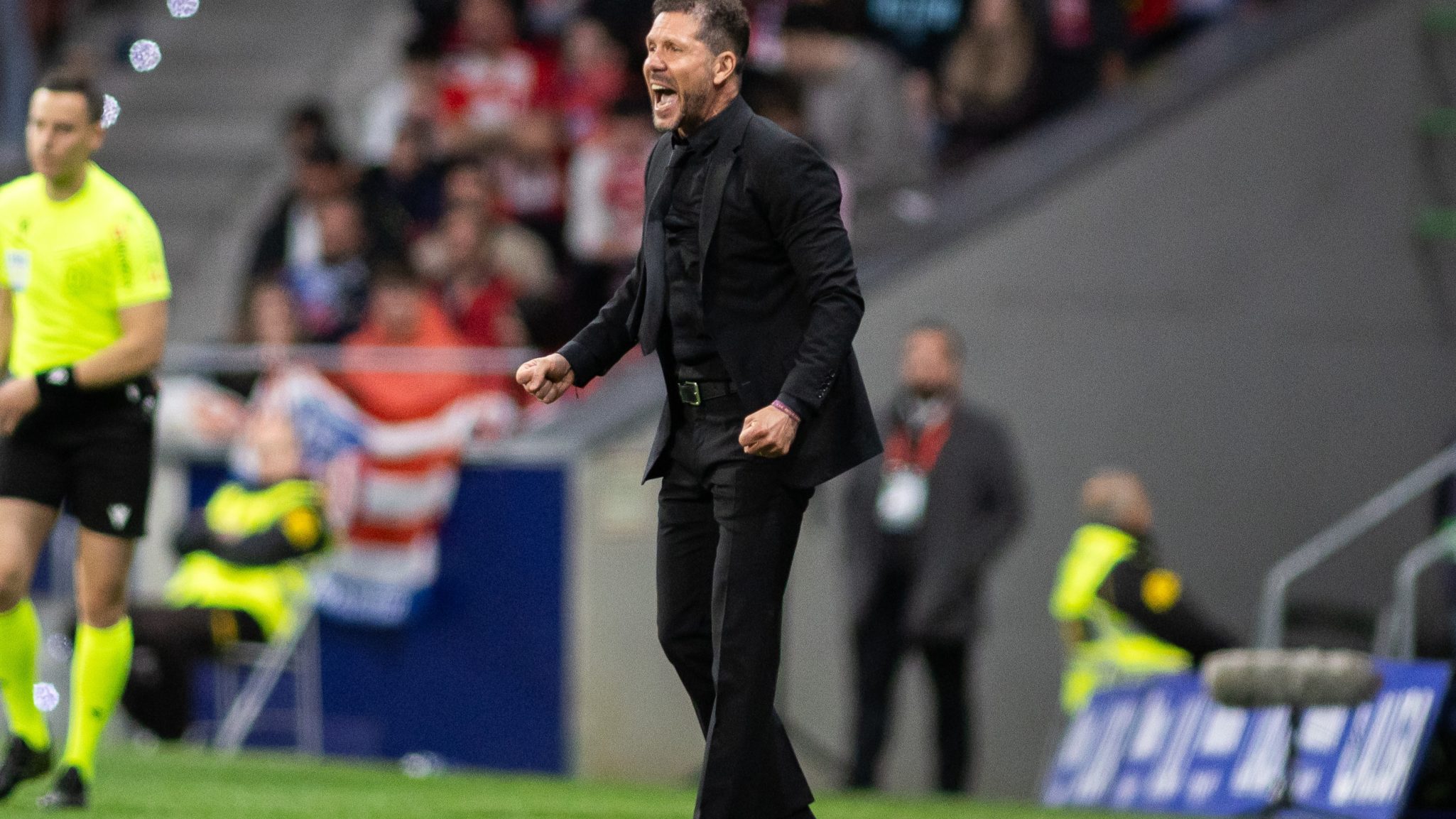
There is still enough continuity to recognize Simeone’s hand. Koke remains the team’s captain and reference point. The sideline intensity has not faded. In the closing moments against Barcelona, Atletico still had to absorb pressure and survive disorder. But Simeone’s most revealing quote came when he said, “We know our strengths and our weaknesses — we’re a team who attacks better than we defend. We’ll go for what we’ve been searching for all these years with total excitement, total faith.” It sounded less like a confession than a conclusion. Atletico have not become a careless team. They have become a team whose route forward depends on accepting a different set of risks.
If Atletico do win this competition, it will probably not be because Simeone rediscovered the formula that carried previous sides to the final. It will be because he accepted that the older formula, by itself, was no longer enough. The hardest thing for a long-serving manager is not creating an identity. It is deciding which parts of that identity can be adjusted without losing the whole structure. This season, Simeone appears to have identified the minimum change required to keep Atletico competitive at the highest level in Europe.