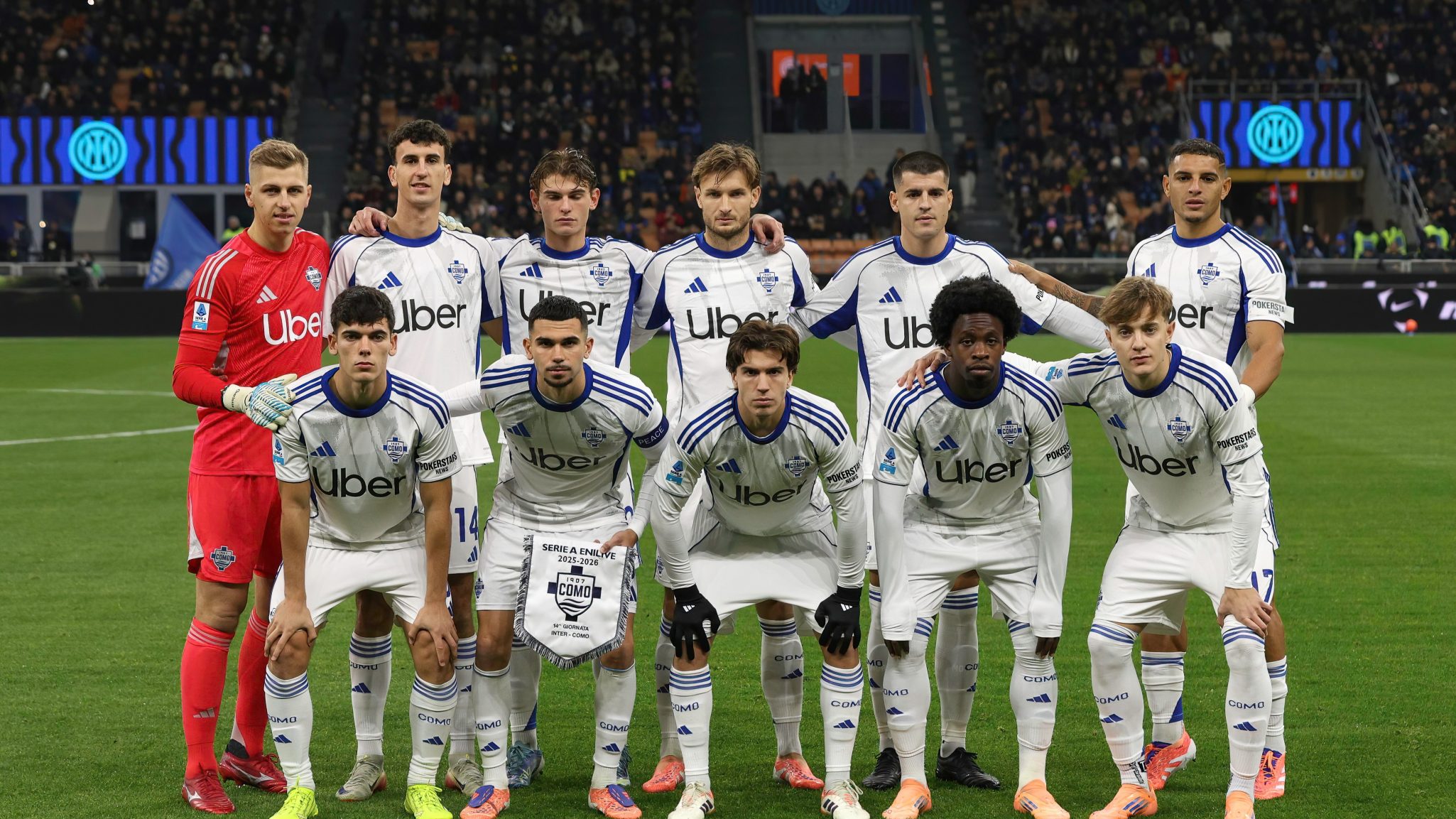
Football is always eager to turn an improbable rise into a fairy tale. It makes the story easier to tell. A fallen club collapses, finds belief, wins a few games, and suddenly the whole thing feels ordained. But Como 1907 do not make sense as a fairy tale. They make far more sense as a plan.
That is what makes them one of the most interesting clubs in Europe right now.
Yes, the climb is dramatic. A club that had to rebuild after collapse and restart from the lower tiers is now deep in the Serie A conversation, playing with a level of control and confidence that has pushed it toward the European places. But the real point is not that Como rose quickly. It is that almost every part of the rise looks intentional. The ownership, the coach, the recruitment, the playing style, even the branding all appear to be moving in the same direction.
Como’s recent history gives the story its force. After the club’s financial collapse and reset, the road back began in Serie D. In 2019, SENT Entertainment took control and laid out a model centered on financial stability, infrastructure, youth development, and the first team. Promotion followed, then a Serie C title, then a return to Serie A. That kind of rise is rare on its own. In Italy, where clubs can spend years trapped in the bureaucracy and damage of the lower divisions, it is even rarer. Como did not simply escape the lower leagues. They moved through them with unusual clarity.
Design over destiny
The temptation is to reduce all of this to one famous face on the touchline. Cesc Fàbregas is, after all, the detail that makes casual observers stop scrolling. But framing him as celebrity garnish misses the point. He is central to the project. Como made that plain when they confirmed him as head coach on a four-year deal after the promotion campaign, while Osian Roberts shifted into a broader development role. That structure matters. It suggests a club building a football identity, not just enjoying the afterglow of a famous former player passing through.
The identity on the pitch is already visible. Como have had the highest average possession in Serie A this season, at a little over 61 percent, which is not the profile of a newly promoted side simply trying to survive. They want the ball. They want control. They want to dictate the rhythm of games against clubs with more history, more money, and more established squads. That does not mean they play safe. What makes them compelling is the tension in their football. There is structure in the buildup, but also risk. There is patience, but also sudden vertical ambition. They are not trying to shrink matches. They are trying to shape them.
The squad building reflects the same logic. Rather than leaning on the standard promoted-club formula of short-term veterans and emergency fixes, Como have leaned into younger, more technical profiles with upside. Nico Paz has become the clearest symbol of that approach, a high-end creative talent trusted with real responsibility, not protected from it. Reuters recently noted that Paz and Anastasios Douvikas had combined for 21 league goals, a number that captures both how productive Como have become and how quickly their project has produced players with real market gravity. The team feels less assembled than aligned. That is a different thing. Aligned teams tend to grow faster because every piece is serving the same idea.
And then there is the part of Como that does not fit neatly into old football language. This is not just a sporting rebuild. It is a brand strategy. Last year, the club’s owners were thinking beyond results, into tourism, fashion, media, and the broader appeal of Lake Como itself. The club later formalized part of that ambition by bringing in Rhude founder Rhuigi Villaseñor as Chief Brand Officer, with a remit that stretches across fashion lines, lifestyle products, and the positioning of Como as more than a football team. That explains why the club feels different even when the ball is not rolling. Como are trying to become something people do not just support, but visit, follow, and wear.
That wider ambition is what makes the Champions League conversation so fascinating. Qualification would obviously change the scale of everything. Better players become easier to attract. The style gains a larger stage. The club’s global visibility accelerates. But even before that, the significance is already there. Como are in this race because they have built a side that belongs in serious matches, not because they have stumbled into a hot streak. Their recent performances have forced the rest of Serie A to take them seriously, and the league table has started to reflect that.
Most ambitious clubs eventually run into a ceiling. Money dries up. The coach leaves. Recruitment loses coherence. The mood outpaces the substance. Como may still hit one of those limits eventually. Football usually humbles every grand idea. But right now, they look unusually protected from the mistakes that normally kill these projects early. The ownership has resources. The football side has a recognizable philosophy. The recruitment appears modern. The cultural strategy is not decorative, it is integrated.
That is why Como feel more important than a novelty story.
They are not just climbing the ladder. They are testing a different model of what a football club can be in 2026, local and global, ambitious on the pitch, curated off it, serious about coaching, serious about aesthetics, serious about turning identity into advantage. Plenty of clubs talk about vision. Very few look this coordinated while chasing it.
So no, Como are not football’s latest miracle.
Miracles are messy, emotional, and usually temporary.
This looks much colder than that. Much smarter too.
Como 1907 are not rising because the game has smiled on them.
They are rising because almost nothing about them has been left to chance.