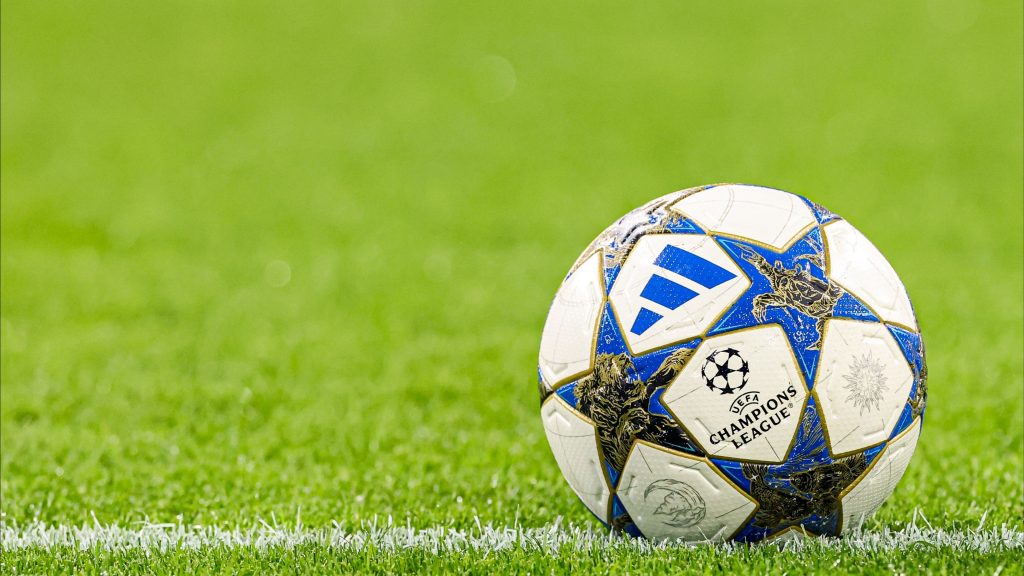
For a quarter century, the Champions League ball has done more than serve a match. It has helped define the competition’s visual identity. Before kickoff, before the anthem reaches its peak, before the camera finds the tunnel, there it is, white panels, dark stars, a design so familiar it barely needs explanation.
That association is now nearing its end.
UC3, the joint venture between UEFA and the European Club Association that handles the commercial rights for UEFA men’s club competitions, has entered an exclusive negotiation period with Nike to become the official match ball provider from 2027 to 2031. The wording matters. This is not yet a completed agreement. But it places Nike in position to take over one of the most visible pieces of branding in club football.
If the deal is finalized, adidas will step aside after a 25-year run as the Champions League’s ball supplier. The company’s relationship with the competition began in 2000, and its star-panel design followed soon after. Over time, the ball stopped feeling like a piece of equipment and started functioning more like a ritual object, one of the recurring images that made the tournament feel instantly distinct.
That is what makes this more than a supplier change. UEFA is not simply swapping one manufacturer for another. It is preparing to alter a visual language that has been repeated across finals, highlights, title races, and generations of players.
A commercial shift with a cultural cost
The practical explanation is straightforward. UC3 opened a competitive tender for the next cycle, and Nike emerged as the frontrunner for a broader package that covers UEFA’s men’s club competitions from 2027 through 2031. Reports indicate the agreement is worth around $45 million per year, and the rights package extends beyond the Champions League to include the Europa League and Conference League.
In business terms, the move is easy to understand. UEFA’s club competitions are being sold in a new commercial environment, one shaped by UC3’s structure and Relevent’s role in packaging and marketing key rights. A match ball contract that once might have felt like a fixed part of the furniture is now being treated like any other premium asset, open to rebidding, bundling, and revaluation.
Still, there is a difference between understanding the logic and ignoring what gets lost.
The Champions League has always been unusually strong at turning objects into symbols. The anthem, the trophy, the arch of the broadcast graphics, and the ball itself all carry memory. They help organize the competition in the mind. The ball belongs in that category.
UEFA itself acknowledged as much when it celebrated the anniversary of the adidas partnership earlier this year. The organization described the starball as something that had grown beyond its original purpose, a design that came to represent the competition’s identity. That is unusually revealing language from a rights holder. It suggests UEFA understood the ball’s symbolic value even as it moved the underlying business into a new tender process.
There is another layer here, too. Nike is not merely stepping into an open slot. It is edging into territory long associated with adidas in European football. The company already won the right to replace adidas as the supplier for Germany’s national team beginning in 2027, ending a relationship that had lasted for decades. If this UEFA deal is completed, Nike will not just gain another property. It will have taken control of another piece of football heritage that once seemed permanently tied to its rival.
What happens next depends on whether exclusive negotiations become a signed agreement. If they do, adidas will remain in place through the end of the current cycle, which would make the 2026-27 campaign the last Champions League season played with the familiar starball under adidas control.
That gives this story a final wrinkle. The redesign itself has not happened yet, and neither Nike nor UEFA has shown what comes next. But the real change is already visible. European football is deciding that even one of its most durable symbols can be reopened, repackaged, and sold again.
That may be good business. It is also the end of an era.